
About
Yujie Zhou
I am Yujie Zhou, a product designer and HCI researcher whose work moves between computational fabrication, interactive hardware, inclusive products, and research-driven software tools. Across projects ranging from flexible pressure-sensing structures, conductive 3D circuit fabrication, and rehabilitation interfaces to accessible toys, speculative ecological systems, and open-source knowledge workflows, I am interested not only in making artifacts, but also in building the methods, toolchains, and interaction logics behind them. This approach lets me work across scales, from form and mechanism to prototyping, evaluation, and system storytelling. I conduct research at the Engineering Research Center of Computer-Aided Product Innovation Design, Ministry of Education, at Zhejiang University, where I work under the supervision of my mentor Cheng Yao, and I received an MSc in Industrial Design Engineering (Mechanical). Previously, I earned my BA in Industrial Design from Beijing Institute of Fashion Technology, where I studied under the guidance of my mentor Fan Zhang. I am currently seeking PhD positions and work opportunities.
Loading graph...
100%
Project
Tag
Area


Recent News
- 08/26
"FlowBlock" wins K-Design Award 2026 — Winner.
"Invisible" wins K-Design Award 2026 — Winner.
- 07/26
"Biosyntax Vanguard" receives James Dyson Award 2026 — China Regional Top 8.
- 06/26
"Biosyntax Vanguard" wins Red Dot Award: Design Concept 2026.
- 10/24
"E-Joint" published in UIST paper
"AIRSAVER" wins Red Dot Award: Design Concept 2024.
- 05/24
"Intercircuit" published in CHI EA '24
- 03/24
"Invisible" receives Core77 Design Awards 2024 — Emerging Technologies — Student Winner and Core77 Design Awards 2024 — Tools — Student Notable.
- 09/23
Enroll at Zhejiang University to pursue a degree in Industrial Design Engineering
- 06/23
Graduated with a bachelor's degree from Beijing Institute of Fashion Technology
- 03/22
"Touchable Pen" wins iF Design Talent Award 2022.
03
E-Joint
03
E-Joint
E-Joint: Fabrication of Large-Scale Interactive Objects Assembled by 3D Printed Conductive Parts with Copper Plated Joints
Xiaolong Li, Cheng Yao, Shang Shi, Shuyue Feng, Yujie Zhou, Haoye Dong, Shichao Huang, Xueyan Cai, Kecheng Jin, Fangtian Ying, Guanyun Wang
- PublicationProceedings of the 37th Annual ACM Symposium on User Interface Software and Technology. 2024: 1-18. (UIST 2024, CCF A)
- AwardJames Dyson Award 2024 — China Division Outstanding Work Award
- Exhibition中国(杭州)艺术与科技国际双年展 — 参展
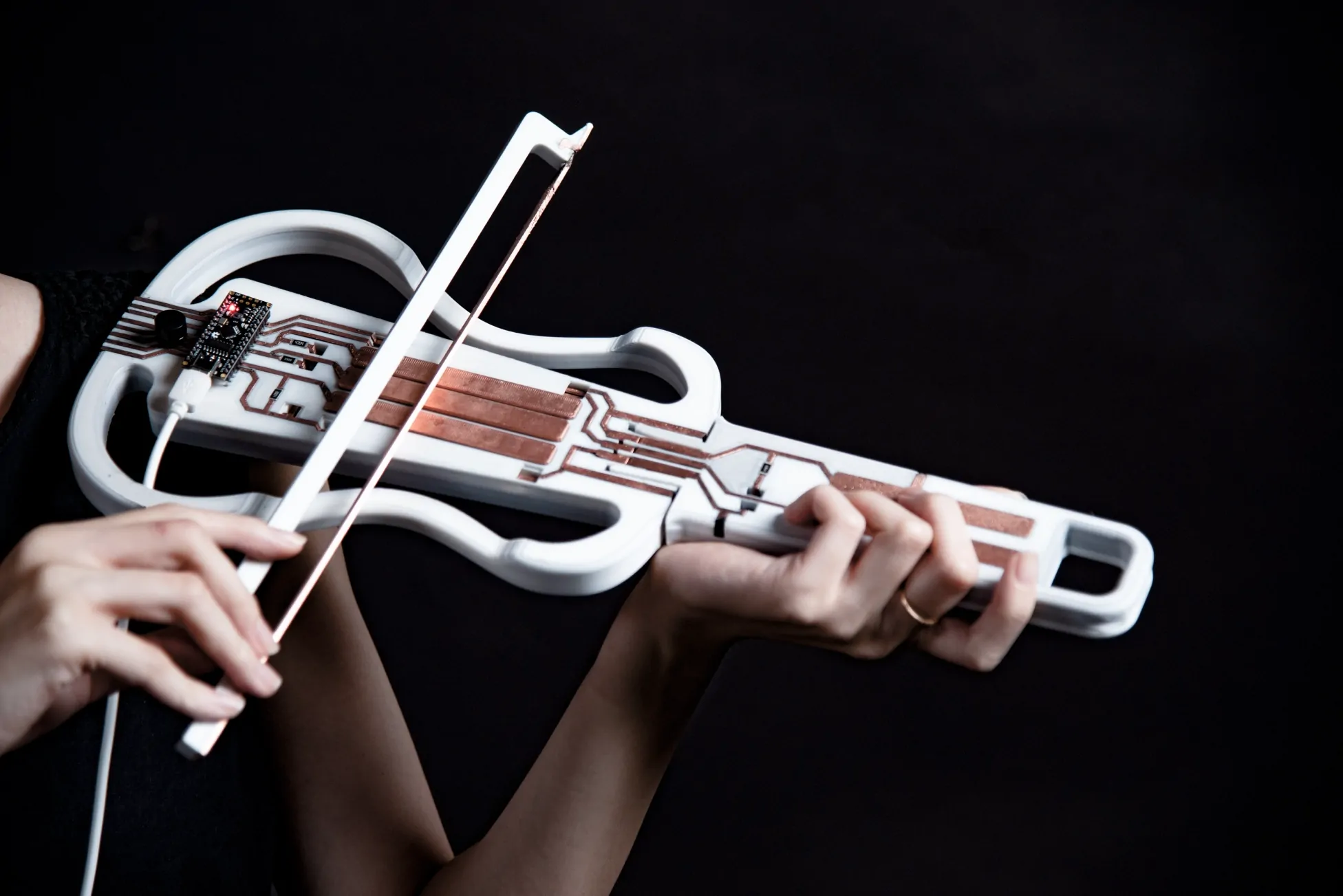
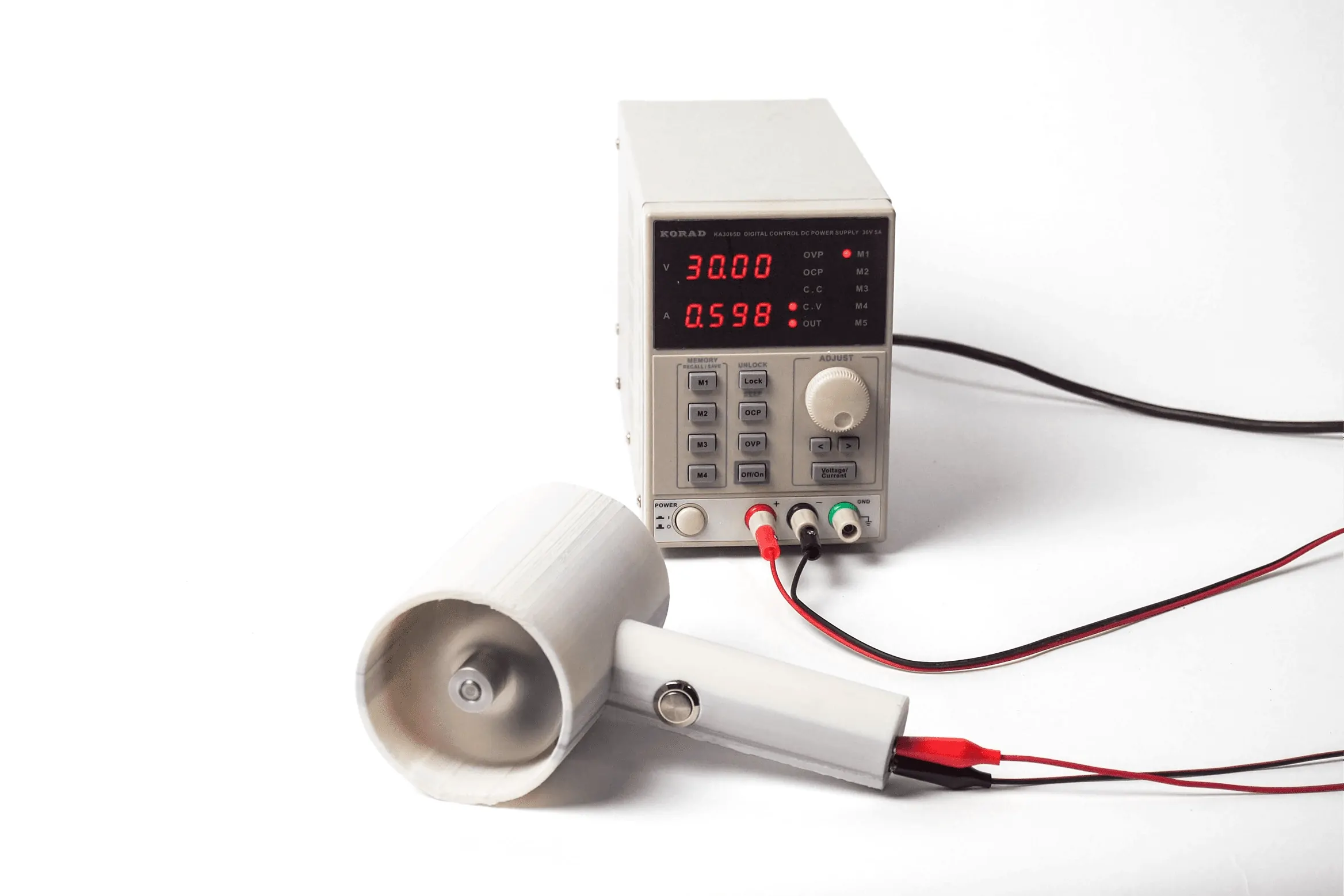
The advent of conductive thermoplastic flaments and multi-material 3D printing has made it feasible to create interactive 3D printed objects. Yet, challenges arise due to the volume constraints of desktop 3D printers and the high resistive characteristics of current conductive materials, making the fabrication of large-scale or highly conductive interactive objects can be daunting. We propose E-Joint, a novel fabrication pipeline for 3D printed objects utilizing mortise and tenon joint structures combined with a copper plating process. The segmented pieces and joint structures are customized in software along with integrated circuits. Then electroplate them for enhanced conductivity. We designed four distinct electrifed joint structures in the experiment and evaluated the practical feasibility and efectiveness of fabricating pipes. By constructing three applications with those structures, we verifed the usability of E-Joint in making large-scale interactive objects and showed the path to a more integrated future for manufacturing.





04
Intercircuit
04
Intercircuit
Intercircuit: Electroplating with Cavities for Fast Fabrication of Complex and High-Performance 3D Circuits
Xiaolong Li, Cheng Yao, Yujie Zhou, Shuyue Feng, Zhengke Li, Yiming Cheng, Shichao Huang, Haoye Dong, Mengru Xue, Guanyun Wang
- PublicationExtended Abstracts of the CHI Conference on Human Factors in Computing Systems. 2024: 1-6. (CHI 2024, CCF A)
In Human-Computer Interaction, multi-material 3D printing is increasingly recognized for its capacity to produce conductive interactive objects. While various fabrication techniques have emerged in this domain, achieving the integration of highly conductive 3D structures within printed objects continues to pose a significant technical hurdle. Our study introduces Intercircuit, a novel integrated technique developed explicitly for fabricating highly conductive interactive objects. This method employs multi-material printing to form unified components along with their embedded structures of lower conductivity, enhancing conductivity through targeted plating. Distinct from traditional multi-material printing and surface conductivity augmentation methods, the Intercircuit method facilitates the creation of complex 3D circuitry while ensuring superior conductivity. Furthermore, this study introduces a supportive design tool aimed at aiding users in crafting conductive frameworks. Moreover, the practical application of this method is further elucidated through a series of case studies.


01
Biosyntax Vanguard
01
Biosyntax Vanguard
Biosyntax Vanguard —— A Programmable Logic-Gated Design for Ecological Restoration
Yujie Zhou, Antong Lv, Hongli Xi, Run Ye, Jiahui Lu, Advisor: Cheng Yao
- AwardRed Dot Award: Design Concept 2026
- AwardJames Dyson Award 2026 — China Regional Top 8
- ExhibitionJames Dyson Award 2026 — Exhibition
Biosyntax Vanguard utilizes wind-driven, DLA-generated tumbleweeds as programmable physical logic gates. The stimuli-responsive shell encapsulates a quiescent bio-payload, degrading only upon contact with specific pollutants (e.g., low pH, hydrocarbons). This triggers the precise release of microbes for in-situ metabolic remediation, ultimately decomposing for trace-free Ecological Restoration.

02
Obsidian-EagleBridge
02
Obsidian-EagleBridge
Yujie Zhou
- Open sourceGithub
Obsidian-EagleBridge is a plugin for Obsidian that allows you to connect to the Eagle. This plugin includes the following functionalities: Quick eagle attachment navigation in Obsidian , Tag synchronization, File viewing , Attachment management.
03
FlowBlock
03
FlowBlock
Yujie Zhou, Antong Lv, Cheng Yao, Haowen Ren, Hang Chen
- AwardK-Design Award 2026 — Winner
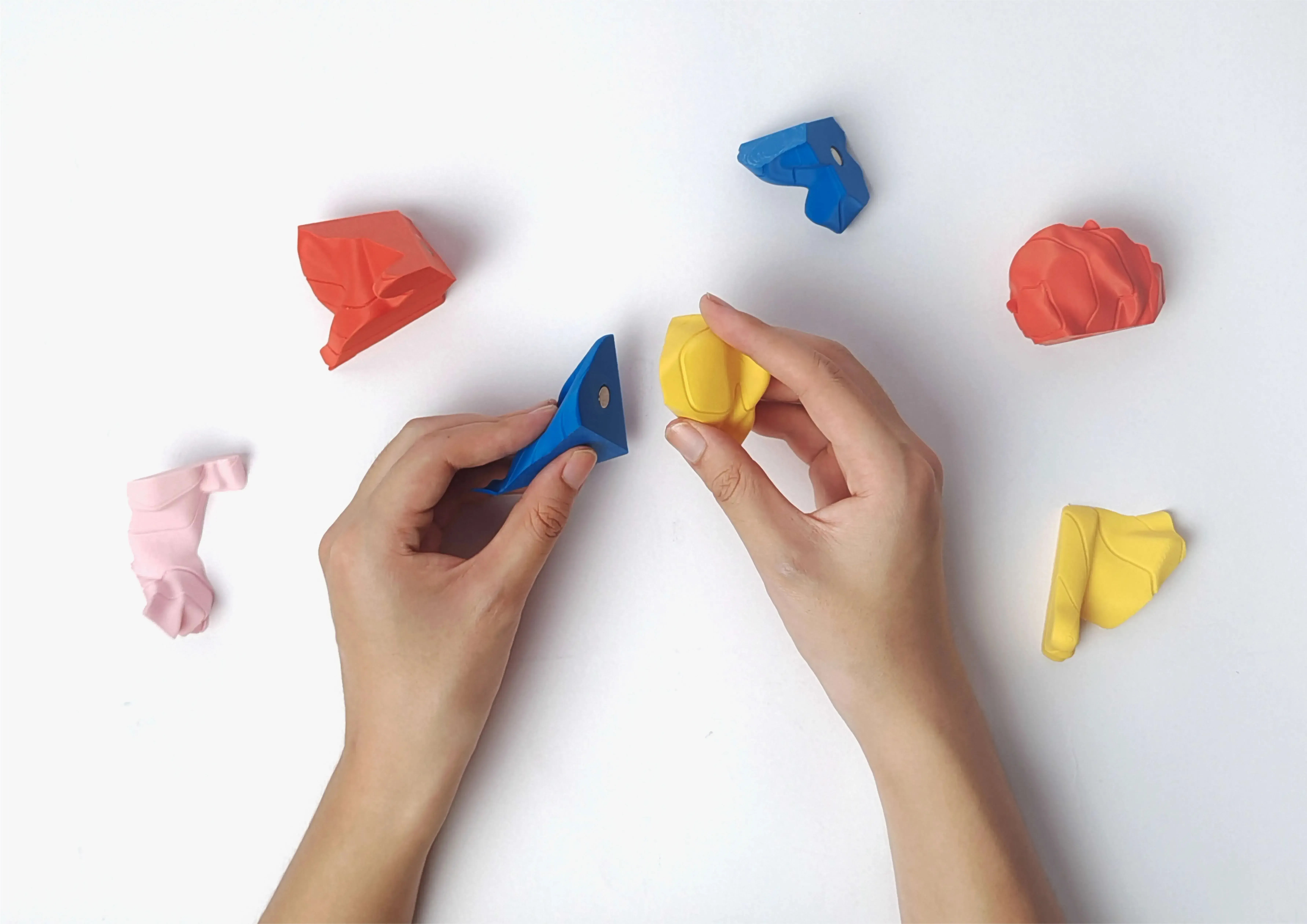
FlowBlock is a modular 3D-printed tactile toy for inclusive play. Parametric segmentation, magnetic joints, and adjustable textures let the same toy adapt to different ability levels, supporting both collaborative play and decorative display.


04
AIRSAVER
04
AIRSAVER
Run Ye, Yujie Zhou, Zhenyuan Ma, Guanyun Wang, Jiaji Li, Mengru Xue, Haowen Ren
- AwardRed Dot Award: Design Concept 2024
- AwardDIA 佳作奖
The AIRSAVER inflatable thermal insulation vest is designed for emergency rescue in cold environments. Lightweight and compact as a can, it is easily transportable. Pulling the lid triggers azide and catalyst to inflate the vest with nitrogen in seconds. The inner material insulates, while the outer material is windproof. AIRSAVER replaces bulky thermal clothing with an accessible solution for complex environments.

05
Invisible
05
Invisible
Invisible: 3D Printed Flexible Parametric Pressure-sensing Innovative Structure Design
Yujie Zhou, Fan Zhang, Yurui He, Qiruonan Li, Jiayi Wang, Xinyi Tian, Xingguo Yan, Antong Lv, Aijing Zhang
- AwardCore77 Design Awards 2024 — Emerging Technologies — Student Winner
- AwardK-Design Award 2026 — Winner
- AwardCore77 Design Awards 2024 — Tools — Student Notable
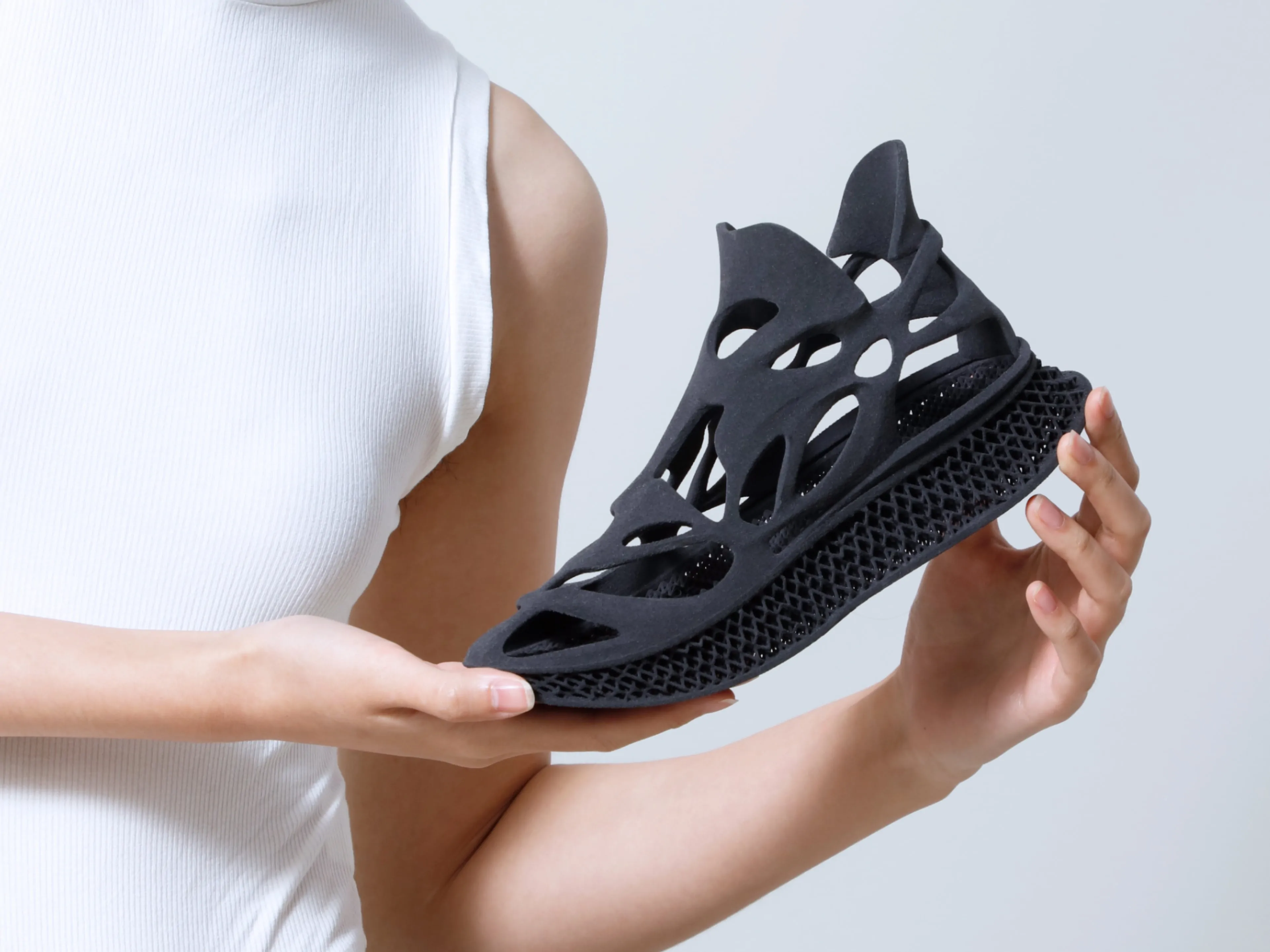
Invisible is a pressure-sensing design project that combines flexible parametric structures, conductive materials, and multi-material integrated 3D printing. Instead of attaching off-the-shelf sensors onto a finished product, we embed the sensing function directly into the parametric lattice itself, allowing the structure to simultaneously perform as form, support, and sensor. Compared with conventional rigid pressure sensors, this approach is softer, more customizable, and better integrated with product form and interaction.



06
Touchable Pen
06
Touchable Pen
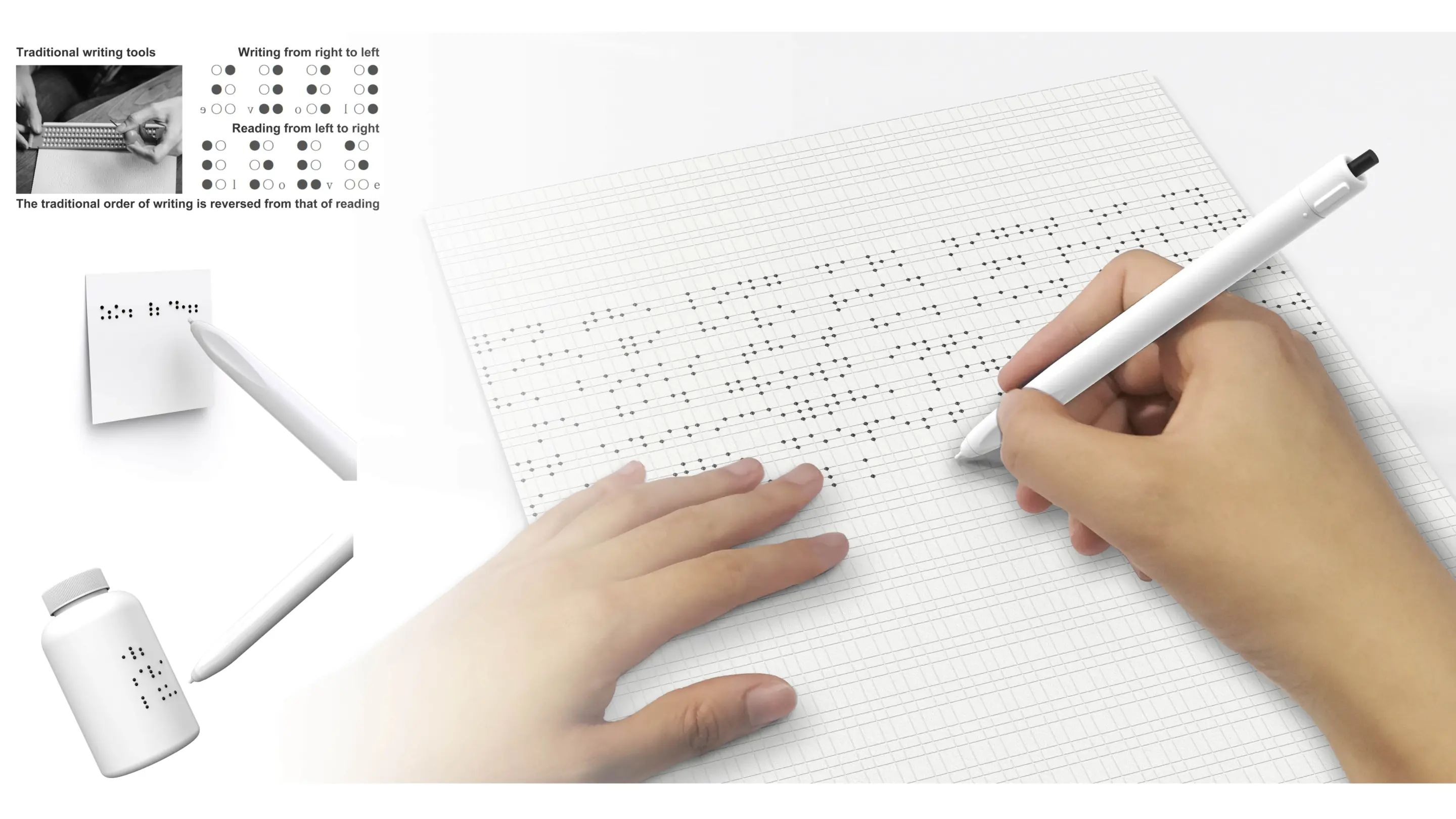
Touchable Pen -- for visually impaired people
Yujie Zhou, Ziyi Wang, Fan Zhang, Antong Lv
- AwardiF Design Talent Award 2022
- Award2023 残疾人辅助器具创新成果推介活动设计组(设计创意)优秀作品
- Award第九届中国国际“互联网+”大学生创新创业大赛北京赛区复赛高教主赛道三等奖
Touchable Pen is a writing instrument designed for the visually impaired. Raised Braille dots are printed when the nib touches any surface. It subverts traditional Braille writing, transforming subtractive manufacturing into additive manufacturing, and reverse writing into forward writing. The Touchable Pen uses low-cost technology to improve both the equity and efficiency of the writing experience for blind people.