
A long-running exploration of far-infrared outdoor and mobility products, focused on a multifunctional heated sleeping bag and an e-bike windshield through research, product definition, and concept development.
Overview
This collaboration with Yueyu Group was not limited to a single sleeping bag concept. It was a broader exploration of how far-infrared heating technology could be translated into outdoor and mobility products with stronger everyday value. Across the full process, two directions became especially important: a multi-purpose heated sleeping bag for camping and temporary rest, and an electric-bike windshield concept for winter commuting and short-distance riding. Both directions were developed under the same larger question: how can thermal comfort products become lighter, more adaptable, and more compatible with real daily behavior?

Research Scope and Opportunity Framing
The project began as a larger research effort rather than a direct form-giving task. Market studies and scenario mapping covered glamping, short-distance leisure travel, office naps, vehicle rest, winter commuting, delivery work, and electric-bike mobility. This wider view showed that thermal products were often fragmented by category and by moment of use. Outdoor rest products were typically locked into night-time use, while commuting products were treated as rough protective add-ons rather than thoughtfully designed equipment. That fragmentation created an opportunity for a warmer, more integrated product language built around soft structures and heating logic.
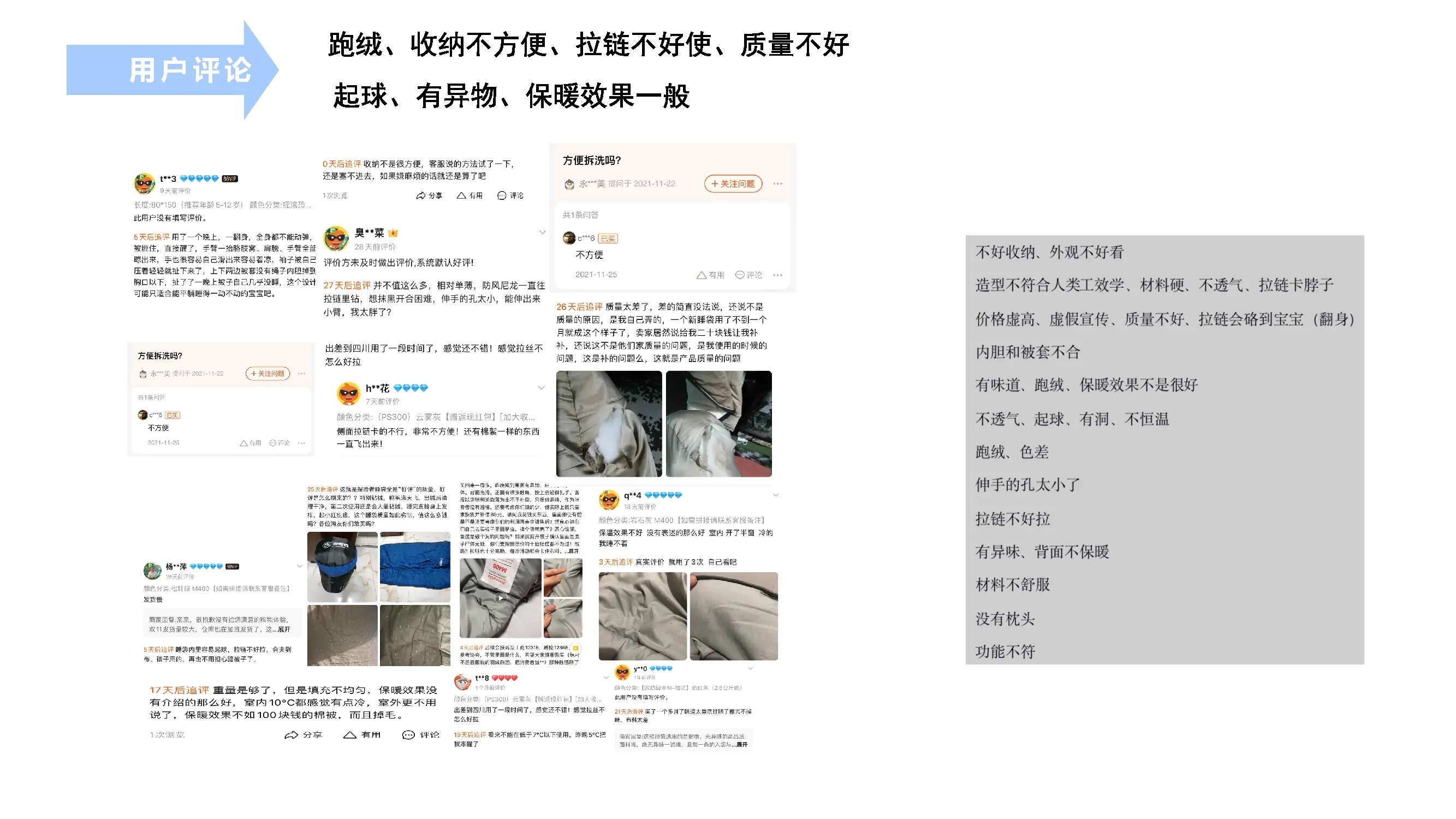
The research moved across adjacent categories rather than staying within one product type. For the outdoor track, it compared sleeping bags, heated sleeping bags, hygiene liners for hotels, electric blankets, vehicle blankets, cushions, and related warming products. For the mobility track, it included electric-bike windshields, heated gloves, scarves, protective accessories, and other winter riding products. These comparisons revealed recurring weaknesses: bulky forms, low visual quality, limited portability, weak heating integration, inconvenient storage, poor walking freedom, and product logic that addressed only one narrow scenario at a time. The materials also showed two strong demand clusters: young users who wanted more refined glamping-oriented products, and winter riders who needed better warmth without accepting heavy, awkward vehicle-mounted covers.
Sleeping Bag Direction
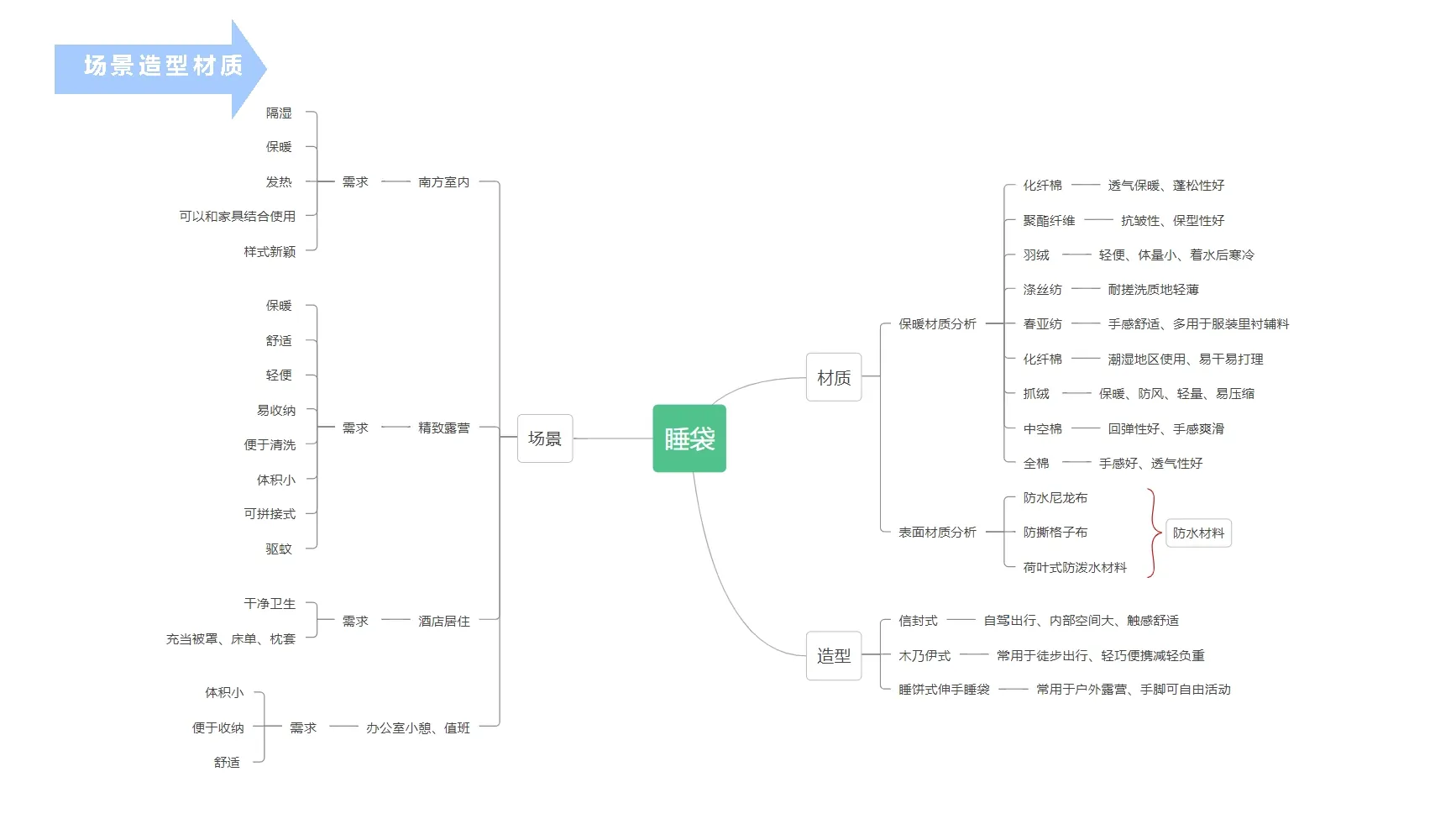
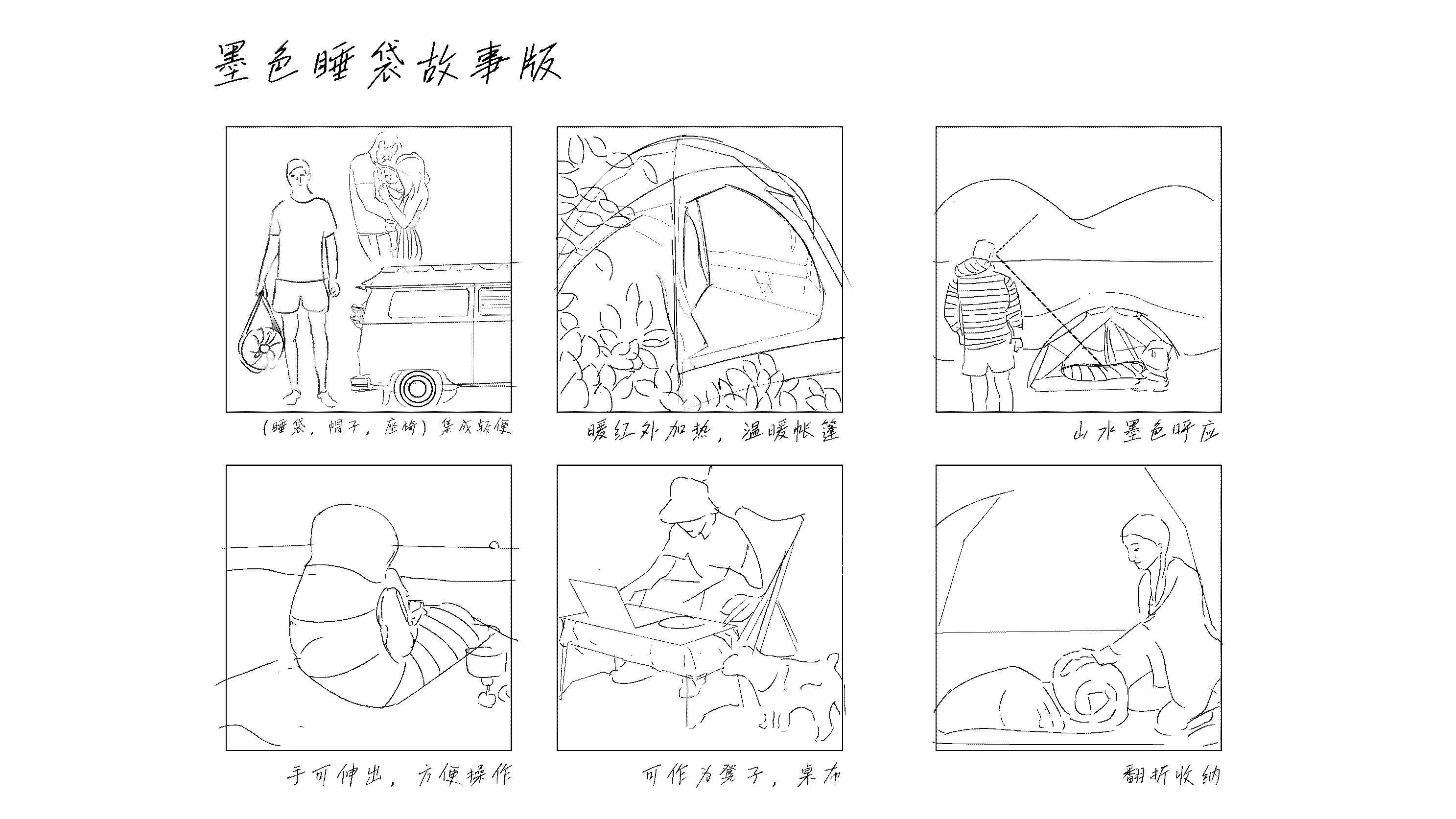
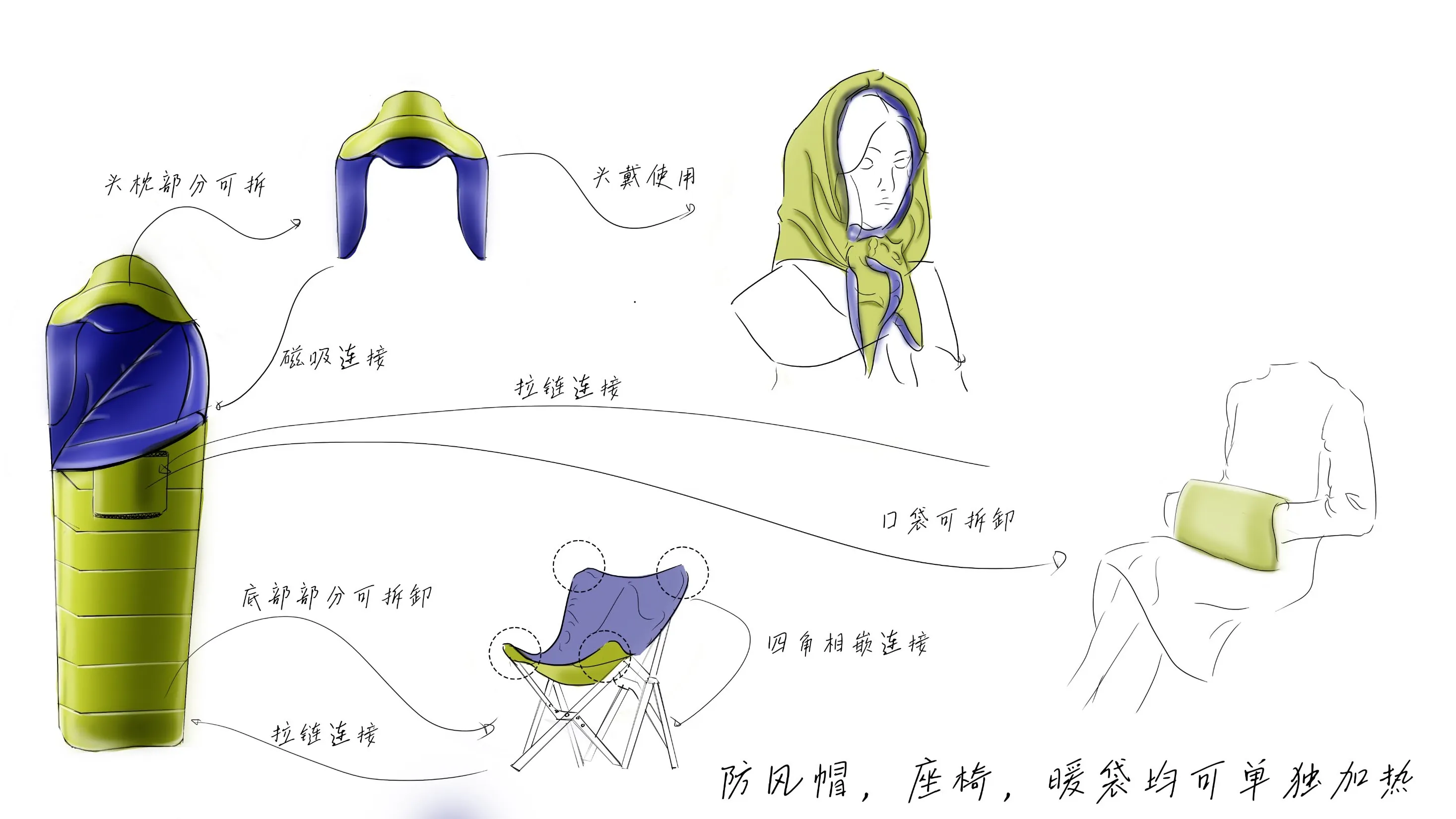
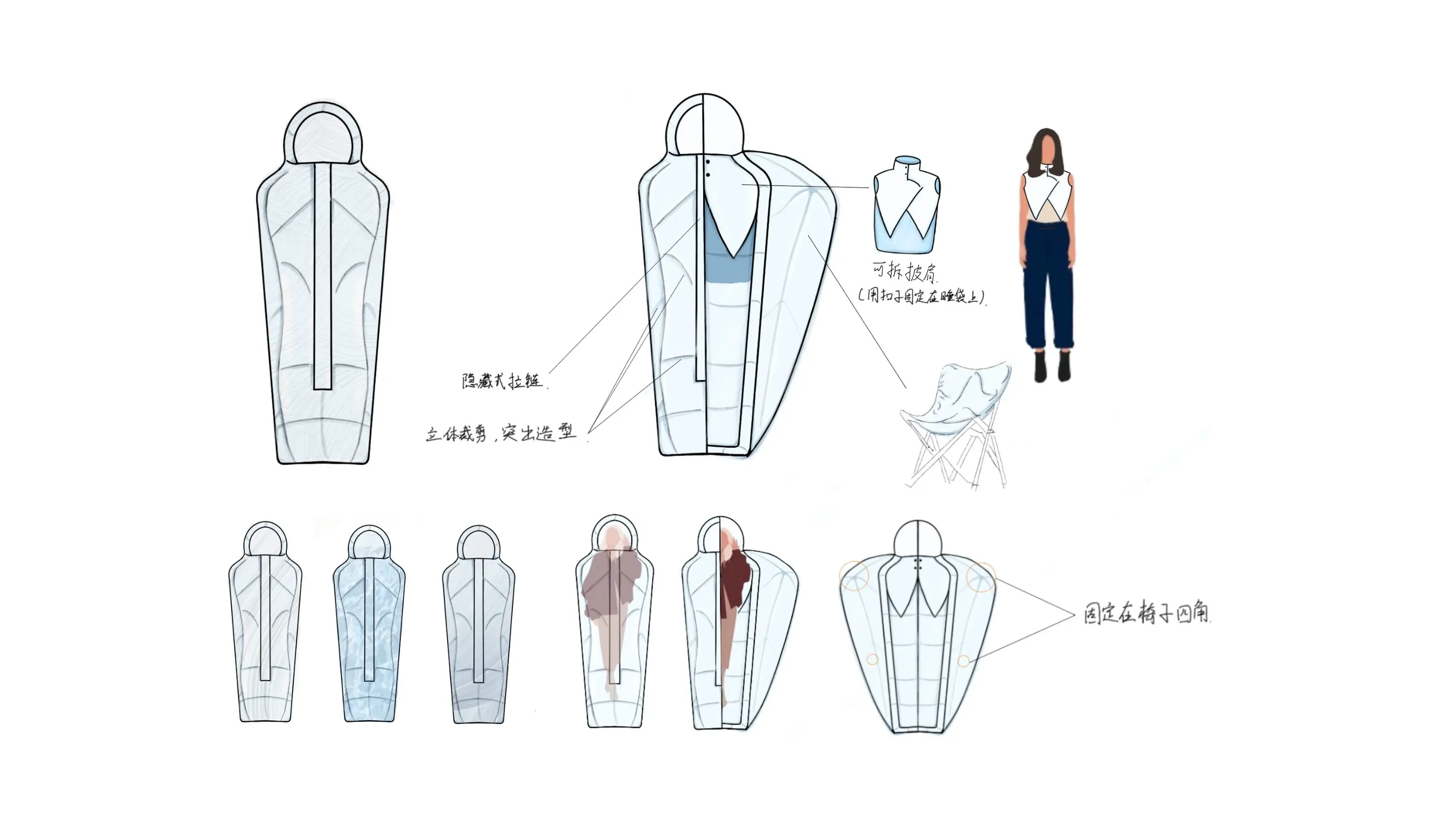
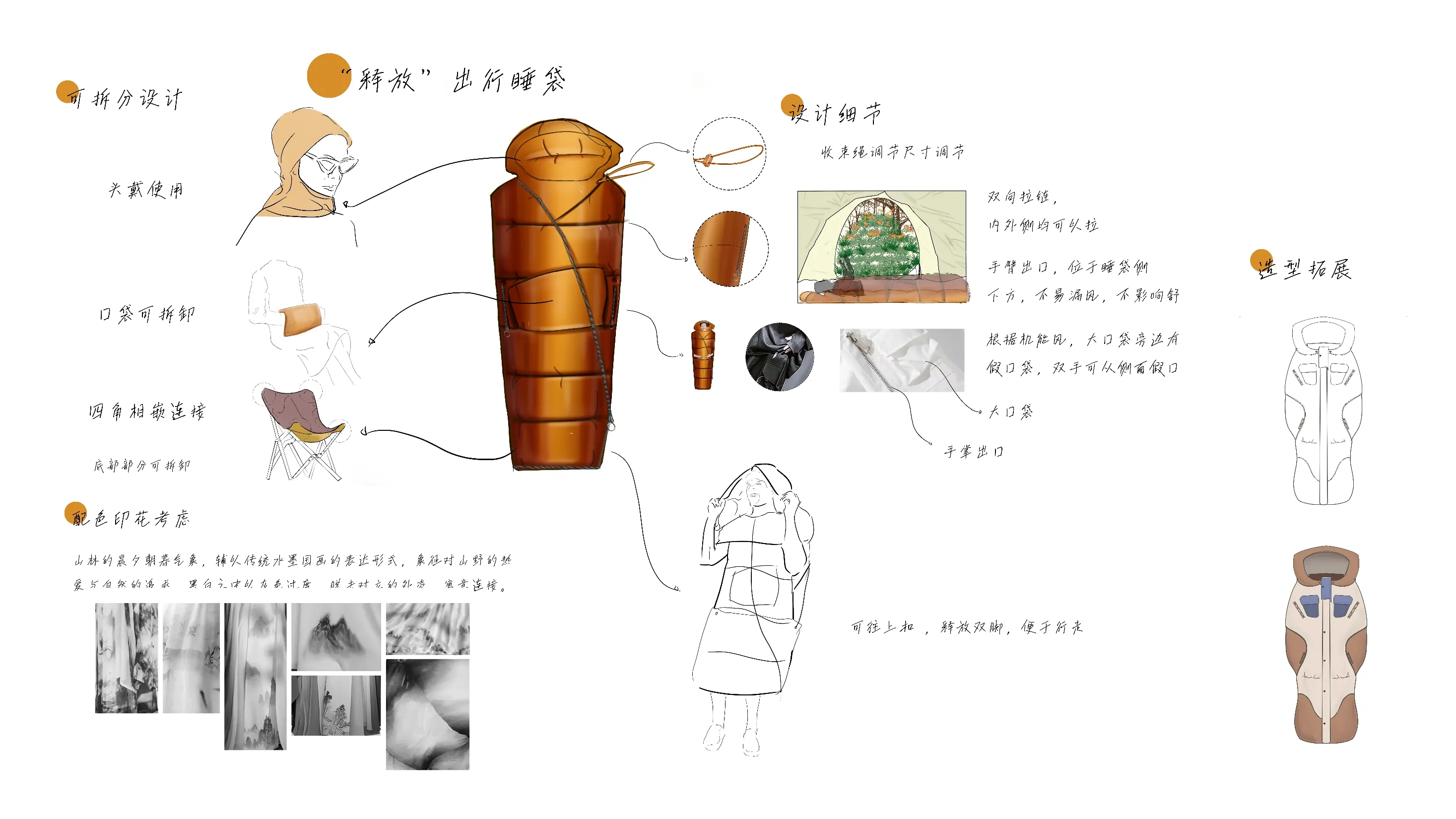
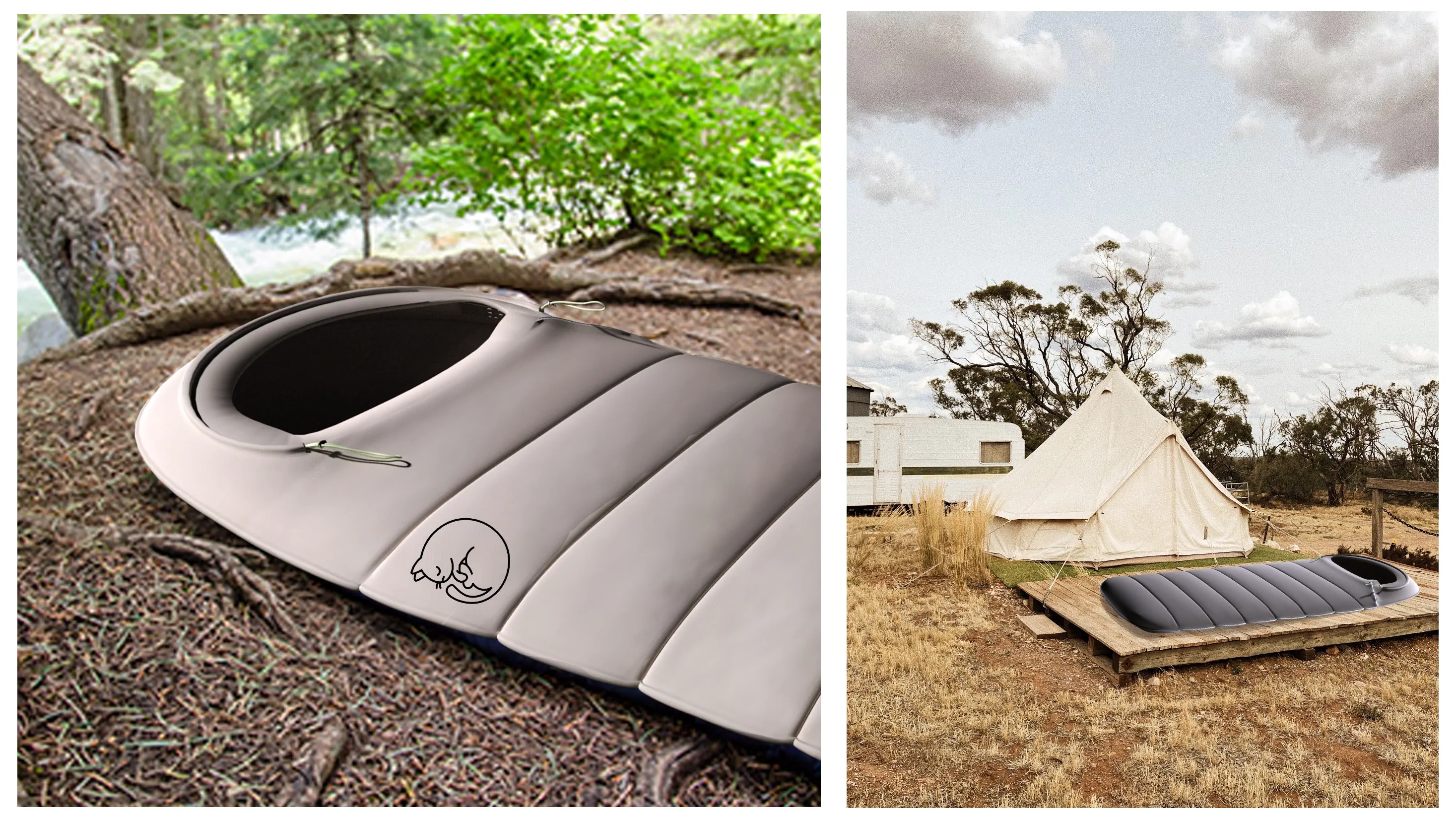
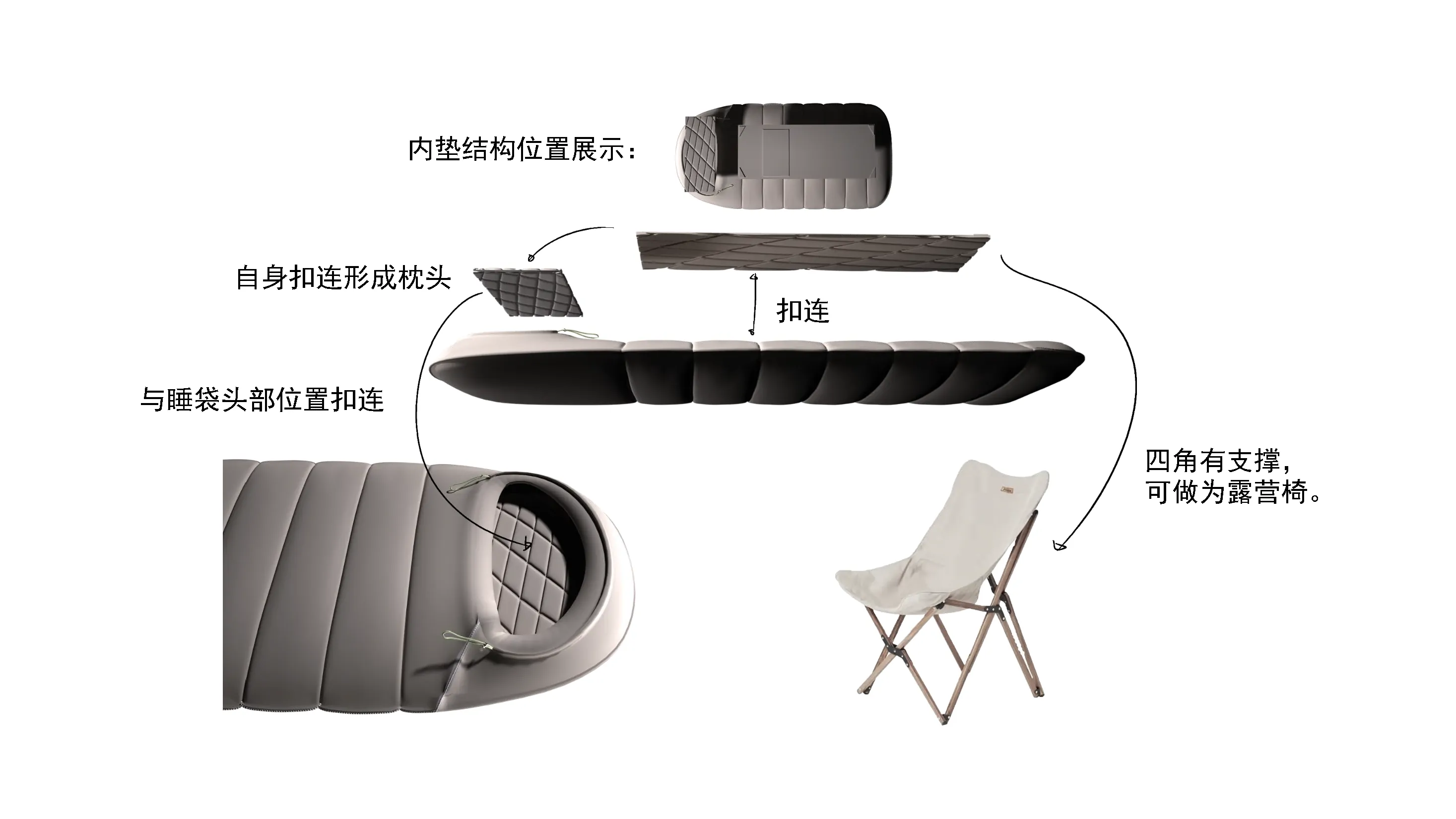
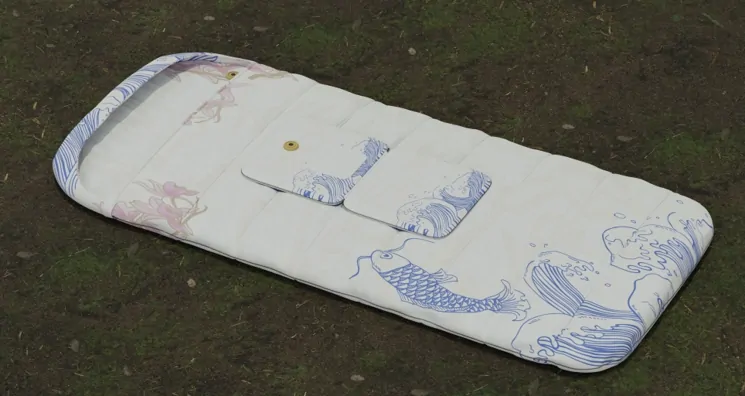
The sleeping bag direction focused on the problem that most sleeping bags remained useful only for a relatively short night-time window. In daytime camping, car travel, office breaks, or temporary indoor rest, users still needed extra objects such as hats, hand warmers, pillows, shawls, or blankets. The concept work therefore explored how a heated sleeping bag could become a more reusable thermal system instead of a single-purpose bedding item. Different proposals tested modular combinations, separated arm access, parent-child use, self-inflating support layers, and different ways of balancing warmth, transformability, and storage efficiency.
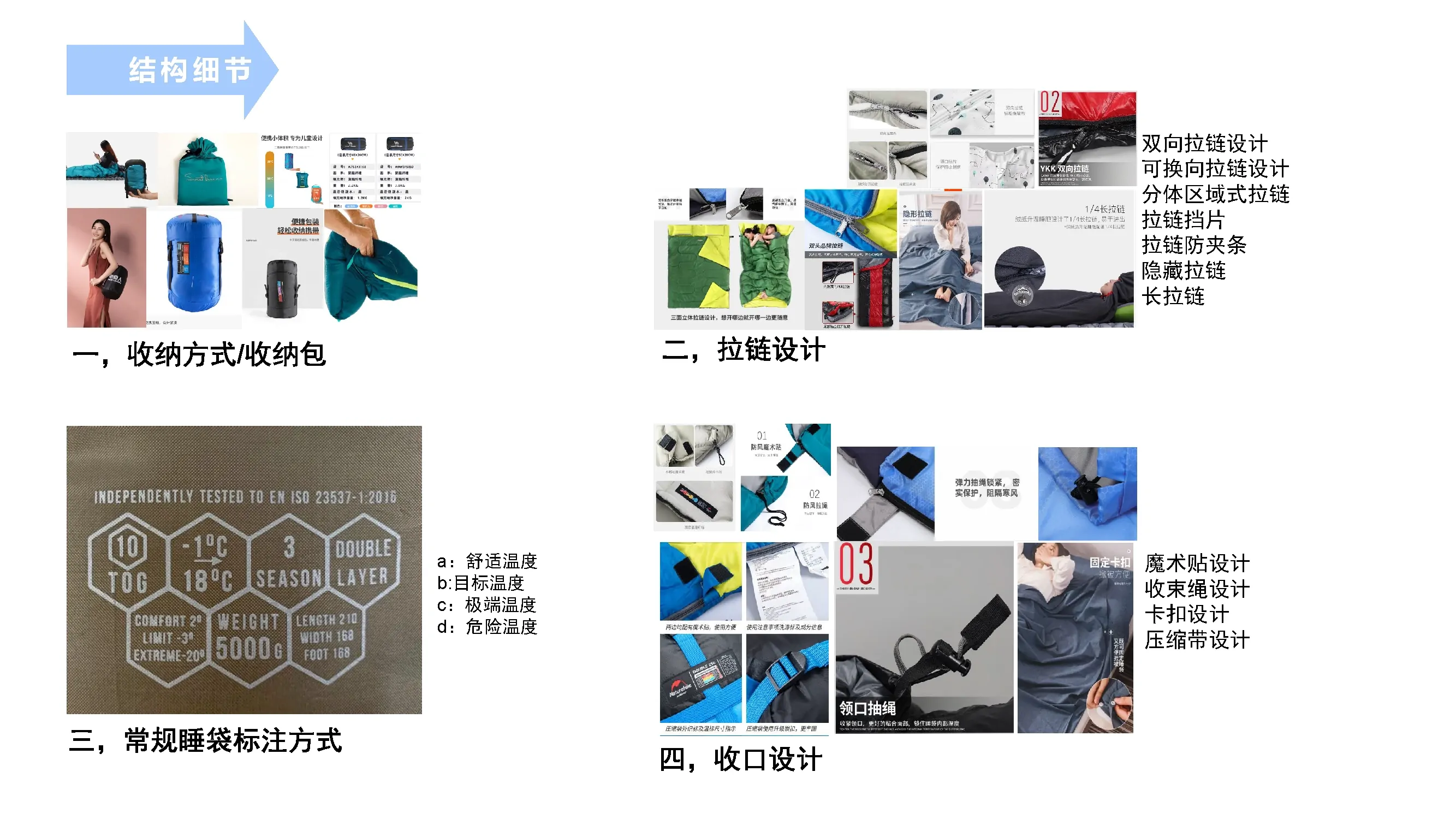
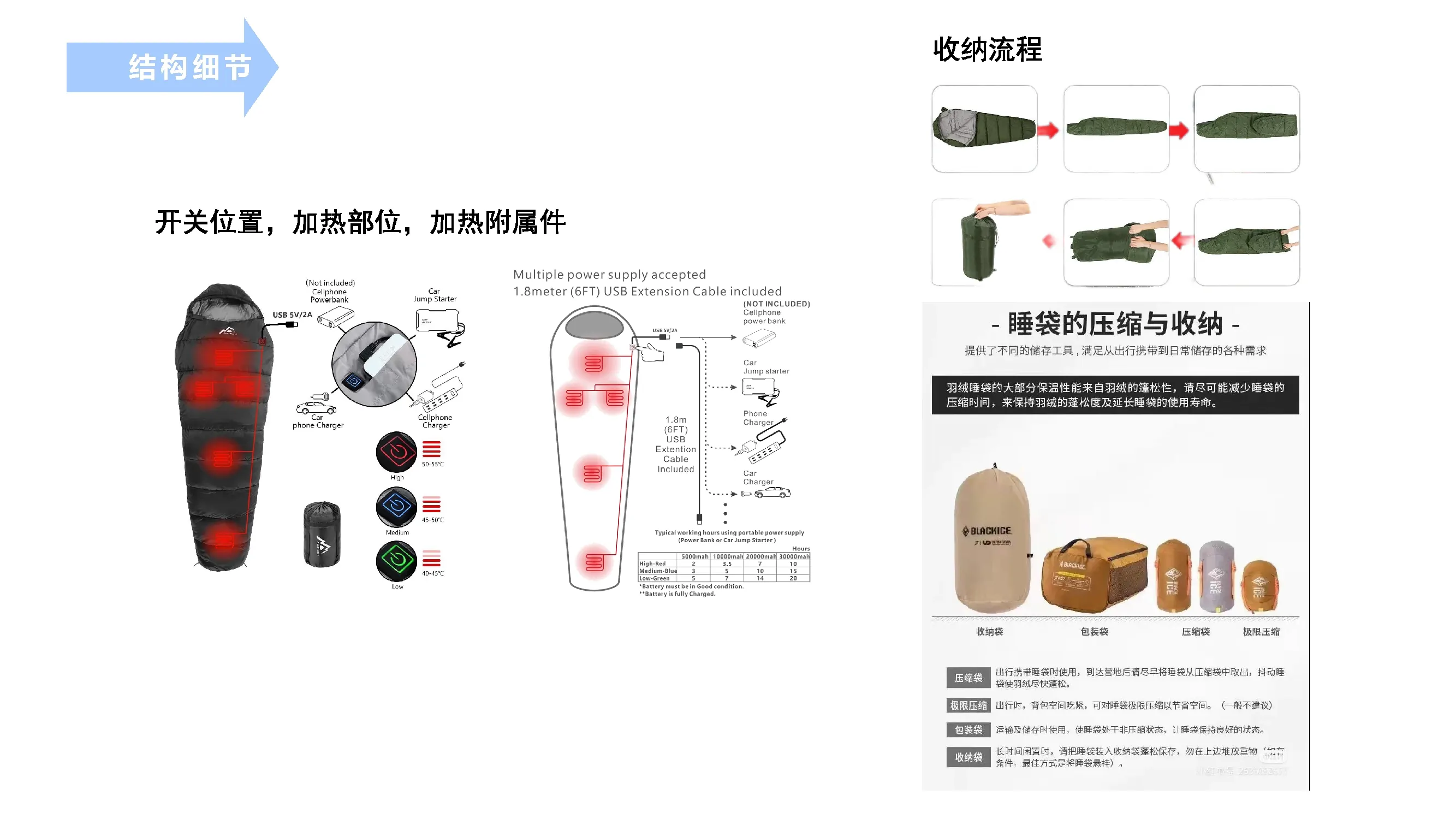
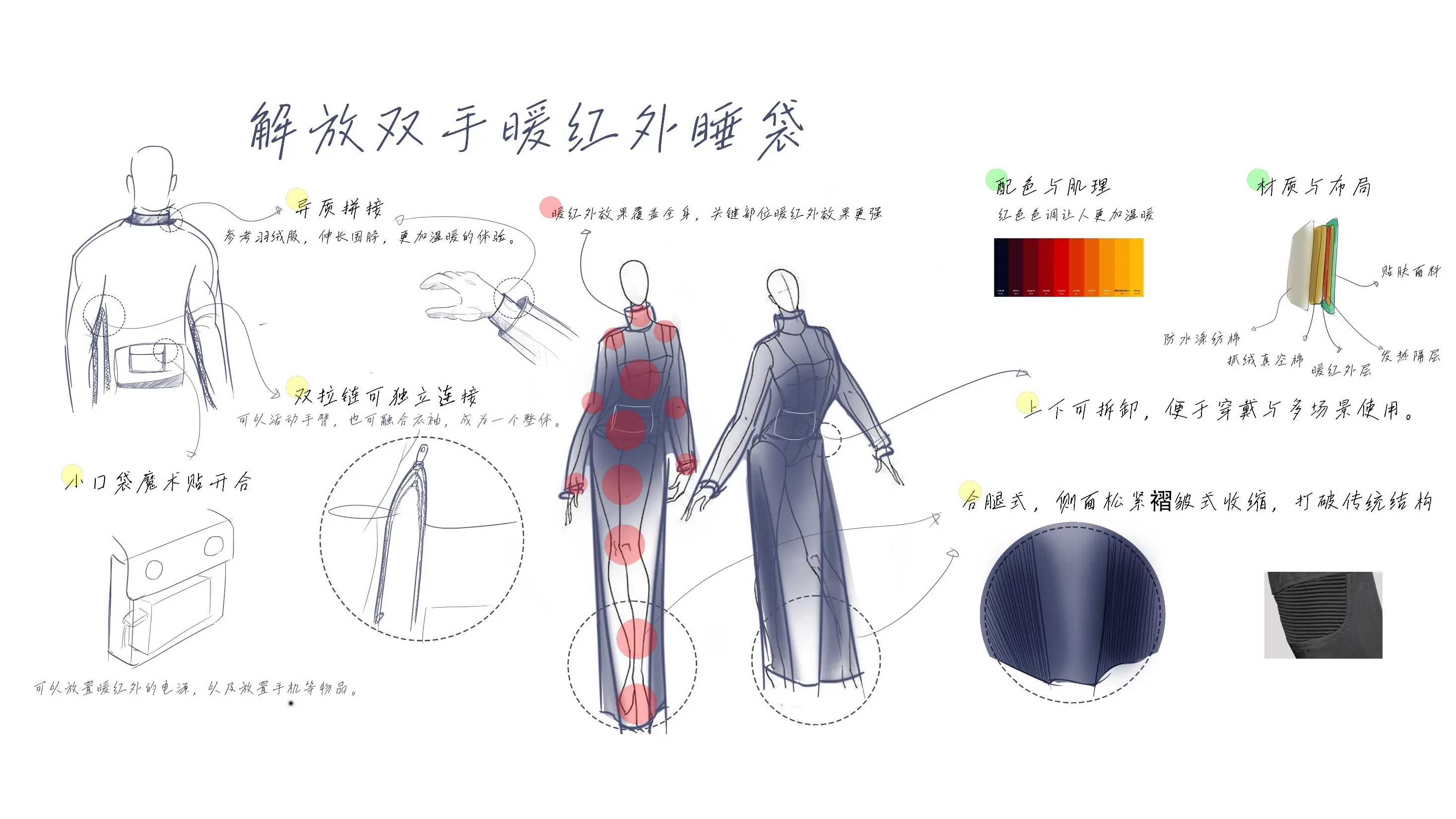
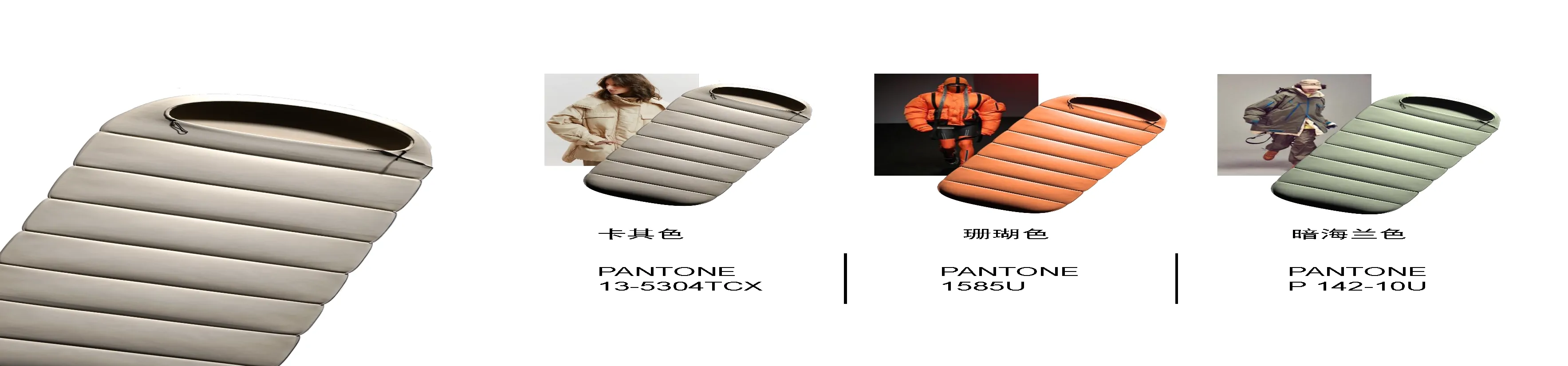
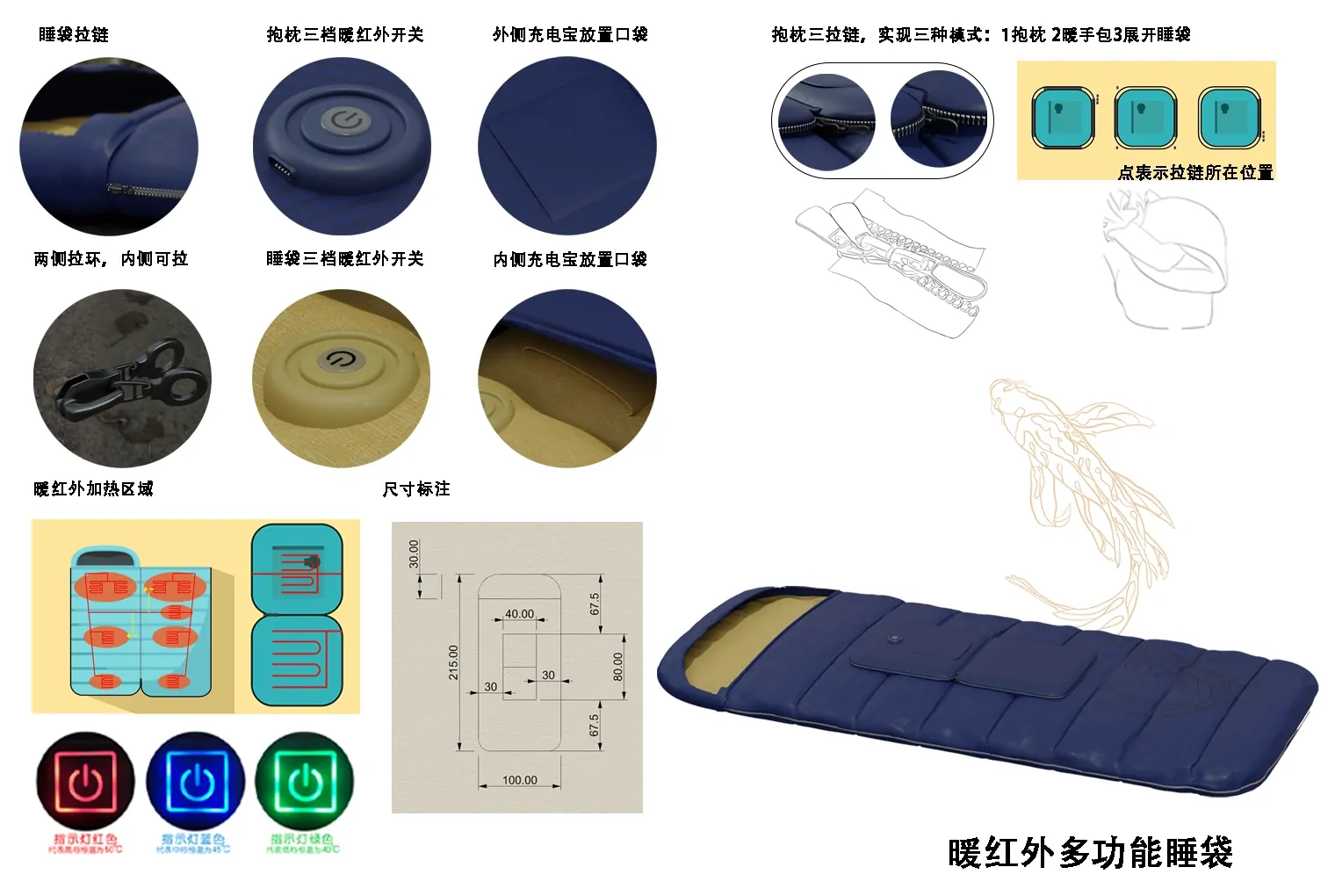
As the direction matured, the project converged on a multi-purpose heated sleeping bag built around far-infrared heating, three-zipper transformation logic, zoned and local heating modes, portable power input, and multiple folded states. The same object was expected to work not only as a sleeping bag, but also as a blanket, shawl, hand-warmer pillow, or resting support for short breaks. Practical details such as power-bank pockets, switch placement, head adjustment, and different heating behaviors in folded versus unfolded states were treated as part of the core concept rather than secondary additions. This made the sleeping bag line a study in extending use frequency and scenario value through structural transformation.
E-Bike Windshield Direction
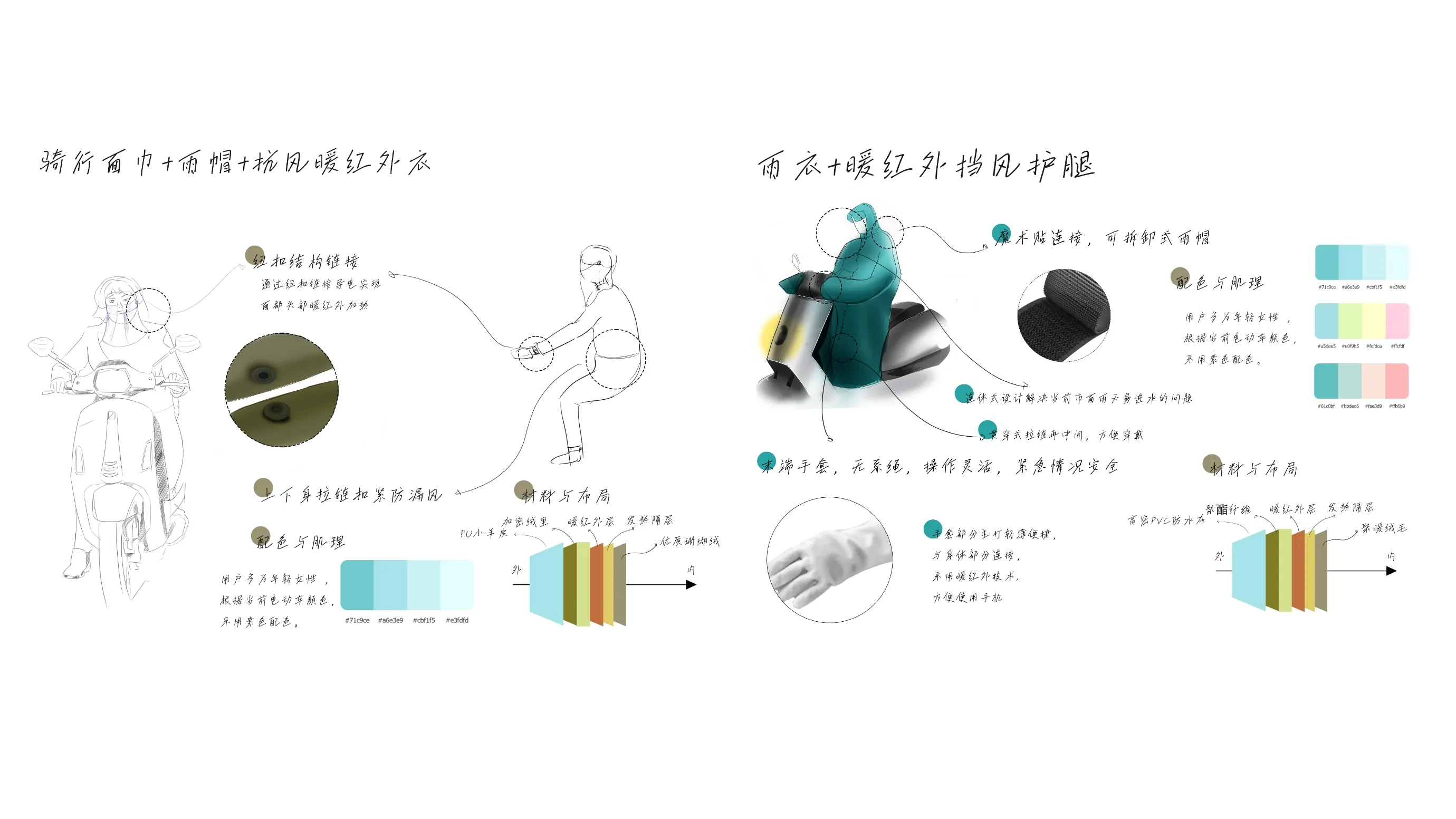
The electric-bike windshield direction addressed a very different but equally common problem. Existing windshields for electric bikes were usually thick, visually heavy, strongly attached to the vehicle, and limited in their ability to handle seasonal change. They could block wind, but they often made operation clumsy, looked outdated, and did little to address users who were especially sensitive to cold, including delivery workers, everyday commuters, and older riders with arthritis or rheumatic discomfort. Research materials also pointed to a growing market context driven by the scale of two-wheeled electric mobility and replacement demand under new national standards.
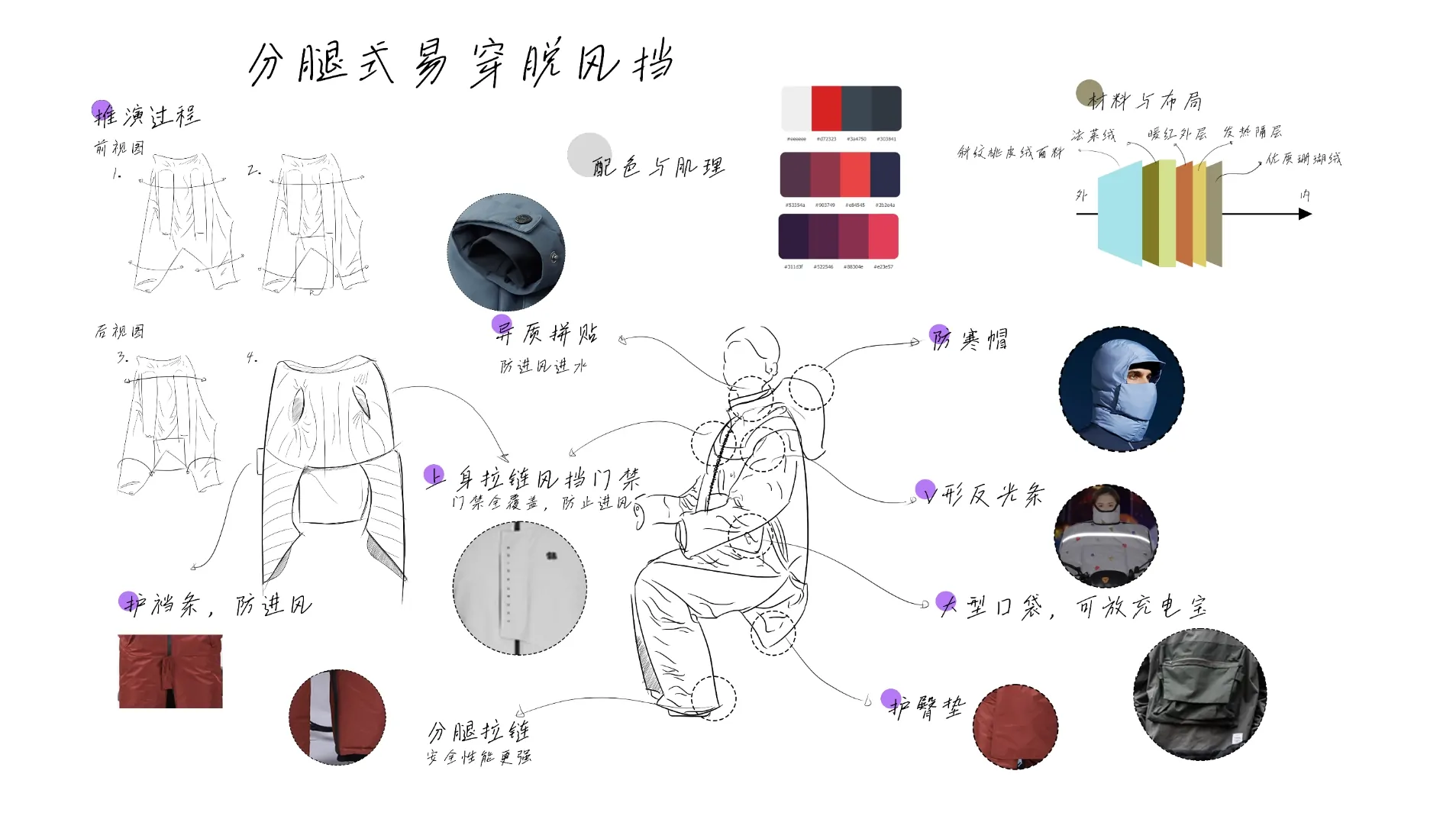
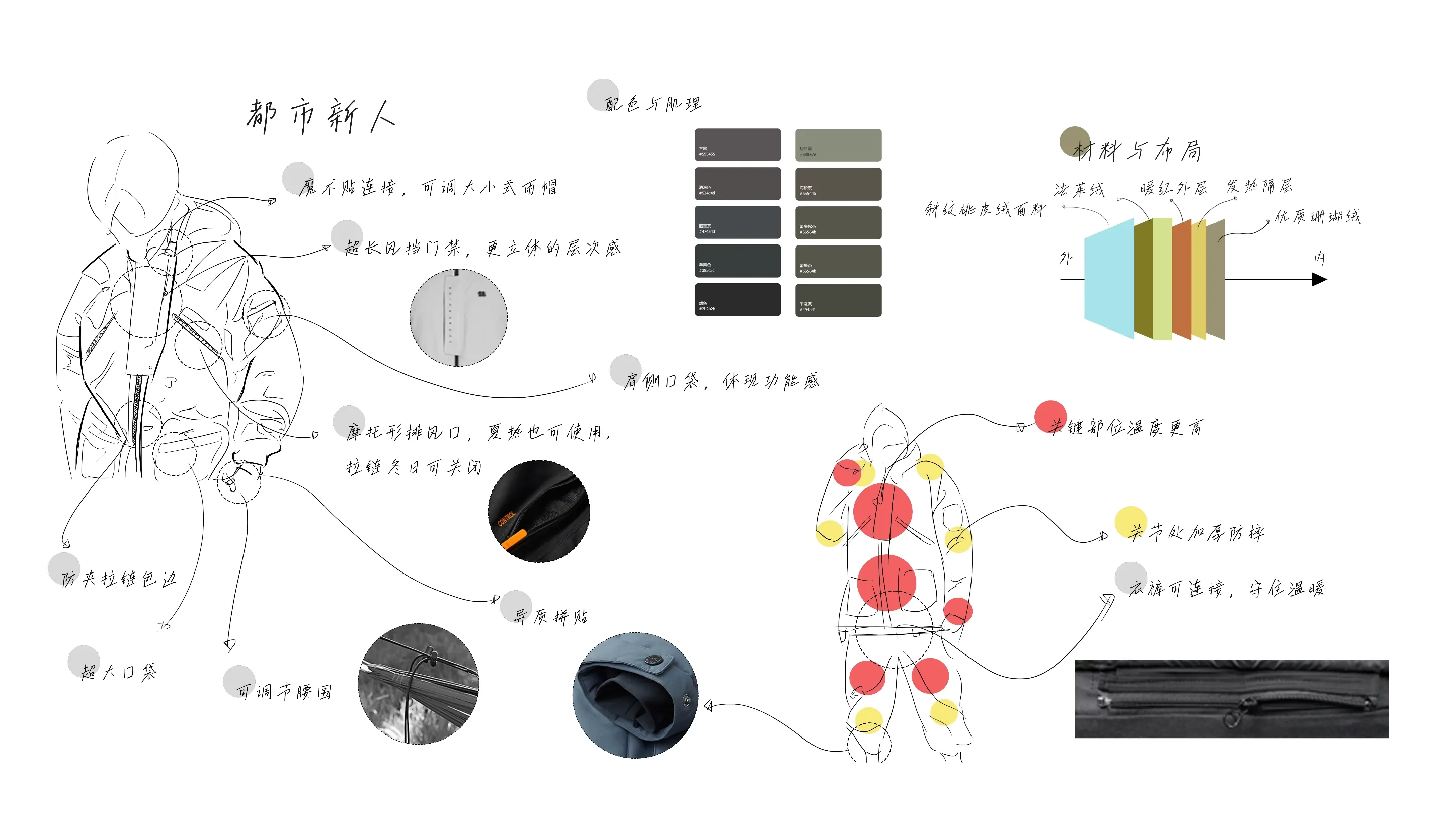
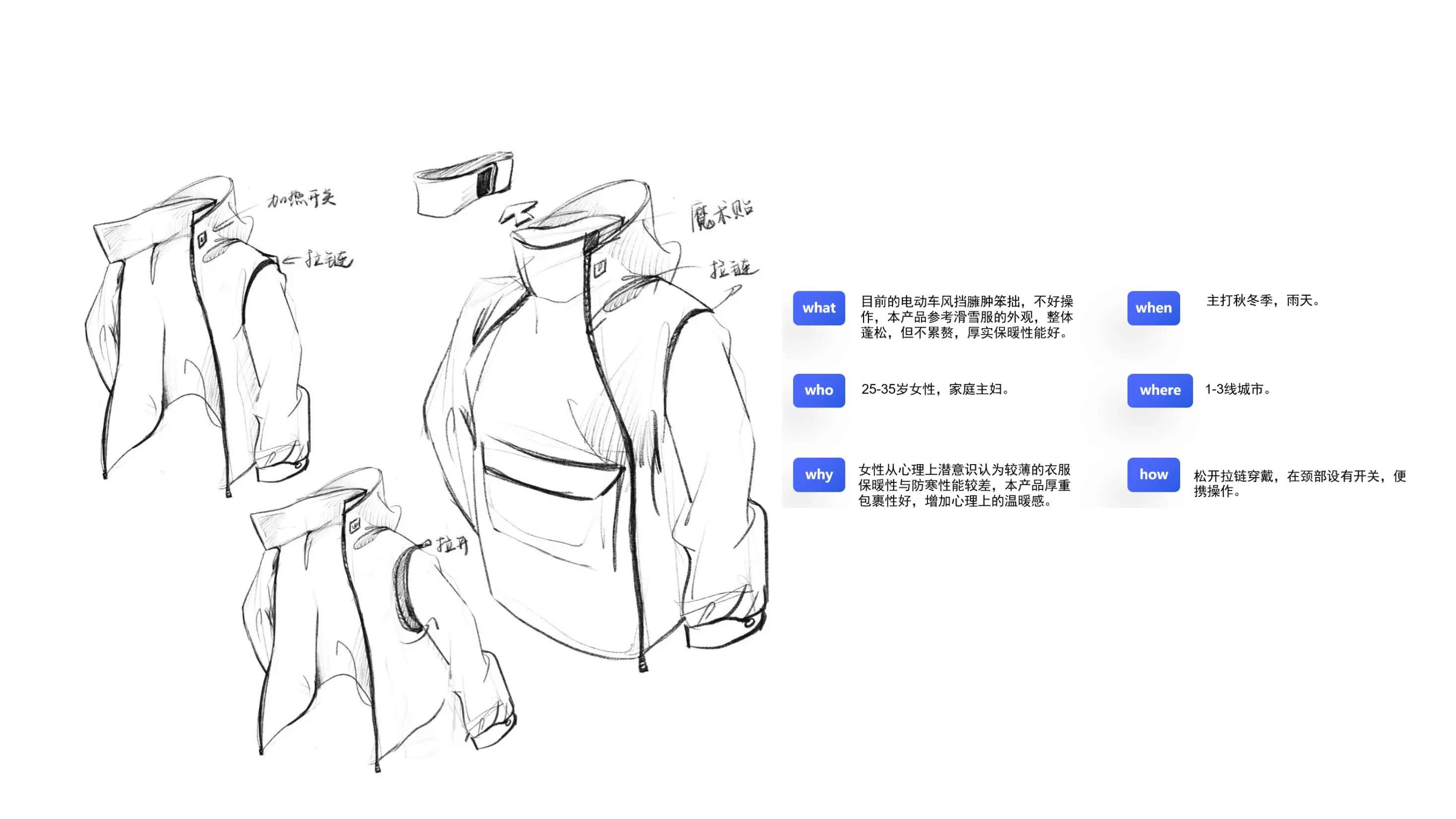
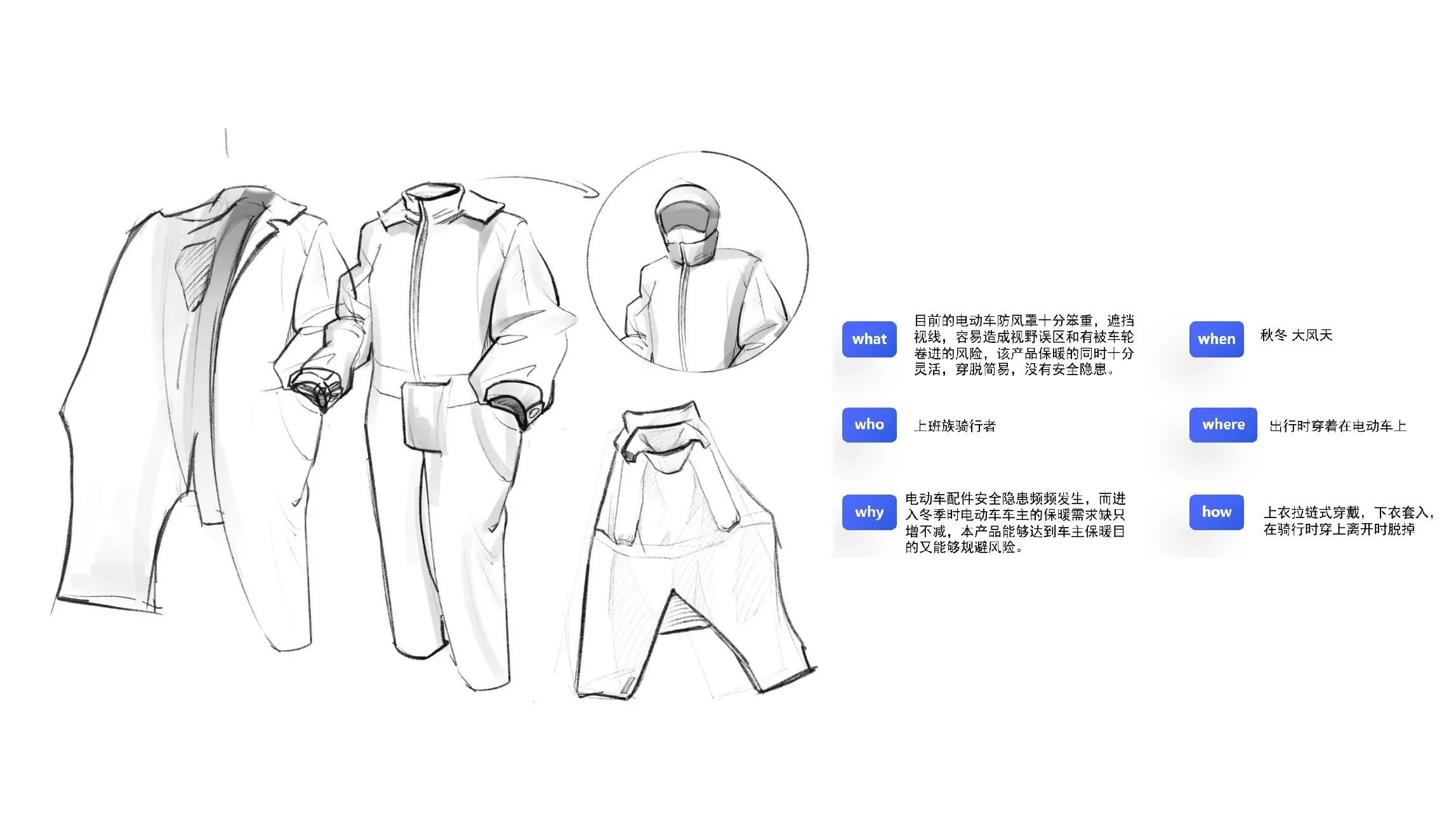
Instead of simply thickening the existing apron-like cover, the concept work explored a more wearable direction. Some routes combined the logic of rainwear, gloves, and windshield protection into closer-fitting structures; others used zipper-based detachable construction so the product could be put on and taken off more quickly and could extend beyond one vehicle type. The design discussions repeatedly centered on mobility, control, and freedom: whether the user could still walk easily after getting off the bike, whether the product could feel lighter and safer than traditional front-mounted shields, and whether heating could be introduced through connection to the bike battery without making the form more cumbersome. Side wings, handle coverage, head and shoulder protection, split structures, and quick-wear logic were all treated as key design variables in the windshield track.
Program Outcome
Taken together, the work at Yueyu Group was less about finalizing one isolated object and more about building a coherent product space around far-infrared thermal comfort. The sleeping bag track pushed the team toward transformable rest products for camping and temporary recovery, while the electric-bike windshield track explored how winter riding protection could become lighter, more wearable, and more responsive to real commuting behavior. The value of the project lies in this shared process of translating one technical direction into multiple scenario-driven product concepts rather than keeping it confined to a single category.