A concept project exploring how graphene thermal therapy could shift from bulky beauty masks to lightweight everyday eyewear through competitor analysis, product definition, and wearing-structure design.
Overview
This project explored how a graphene-based beauty and therapy device could move beyond the conventional mask format and become a lightweight eyewear concept for daily use. Most existing beauty masks and thermal eye-care products were still tied to a fixed treatment ritual: they were bulky, visually intrusive, inconvenient to carry, and often awkward to wear together with makeup, hairstyles, or prescription glasses. The central design question was therefore not only how to deliver thermal therapy, but how to reinterpret that therapy as a fashion-oriented wearable that users would actually be willing to wear in everyday life.
Research and User Framing
The early stage focused on benchmarking both direct competitors and adjacent product categories. We reviewed LED beauty masks, graphene hot-compress masks, eye massagers, protective face shields, fashion sunglasses, and foldable wearables to understand how similar products handled visibility, support points, power supply, cleaning, portability, and public acceptability. Instead of evaluating products only by features, we examined how they behaved in real situations: whether they interrupted communication, interfered with makeup, disrupted hair styling, required a private setting, or created friction when users wanted short treatment sessions during commuting or office breaks.
This research gradually clarified the target direction. The concept was aimed at young adults, especially users who are attentive to facial appearance, spend long hours in front of digital screens, and are open to beauty technology but do not want to carry a device that looks medical or inconvenient. The product therefore needed to feel portable, socially acceptable, and visually refined. That requirement pushed the project away from the logic of “home-only treatment equipment” and toward a more wearable, fashion-adjacent form.
Concept Development
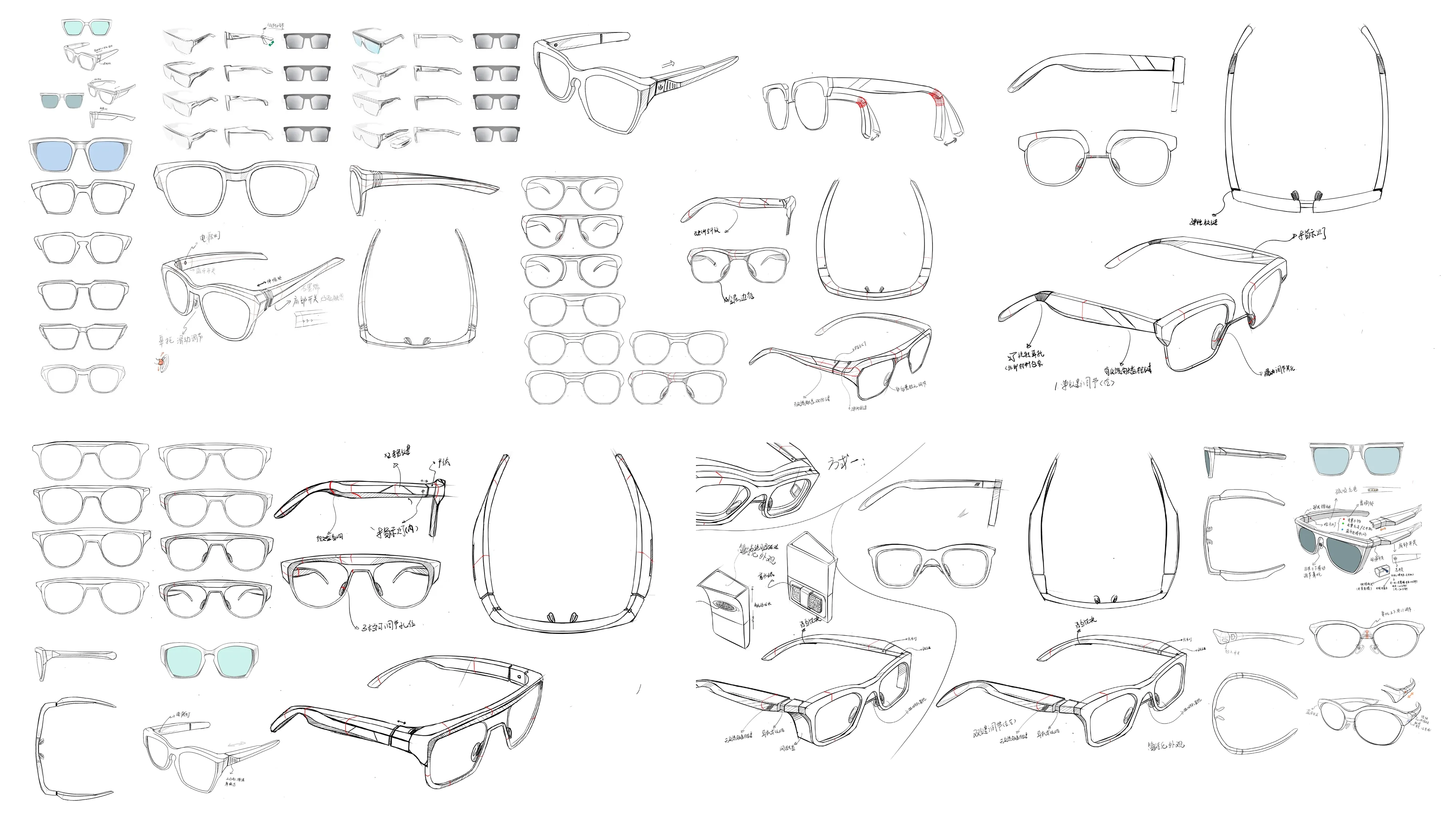
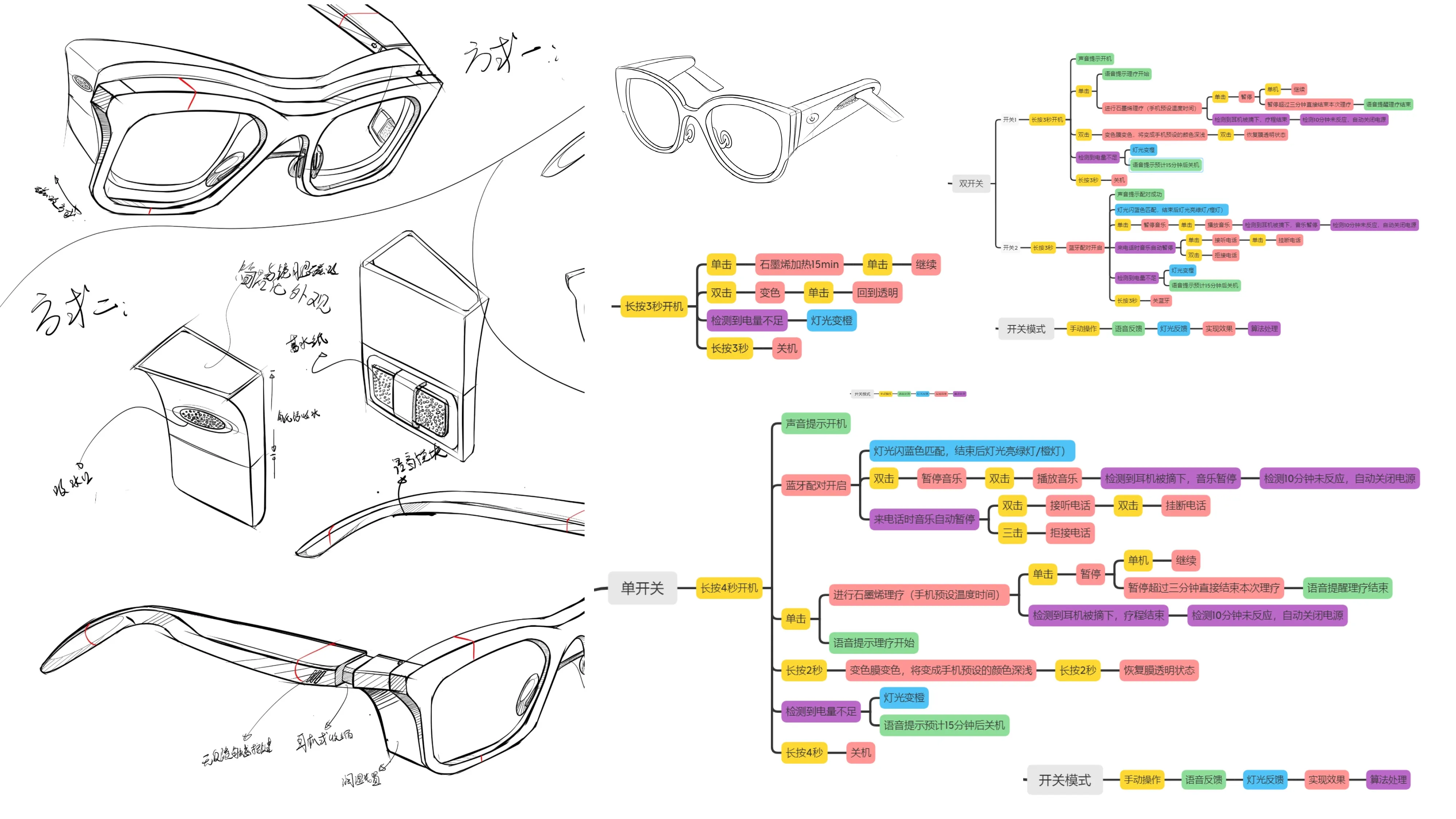
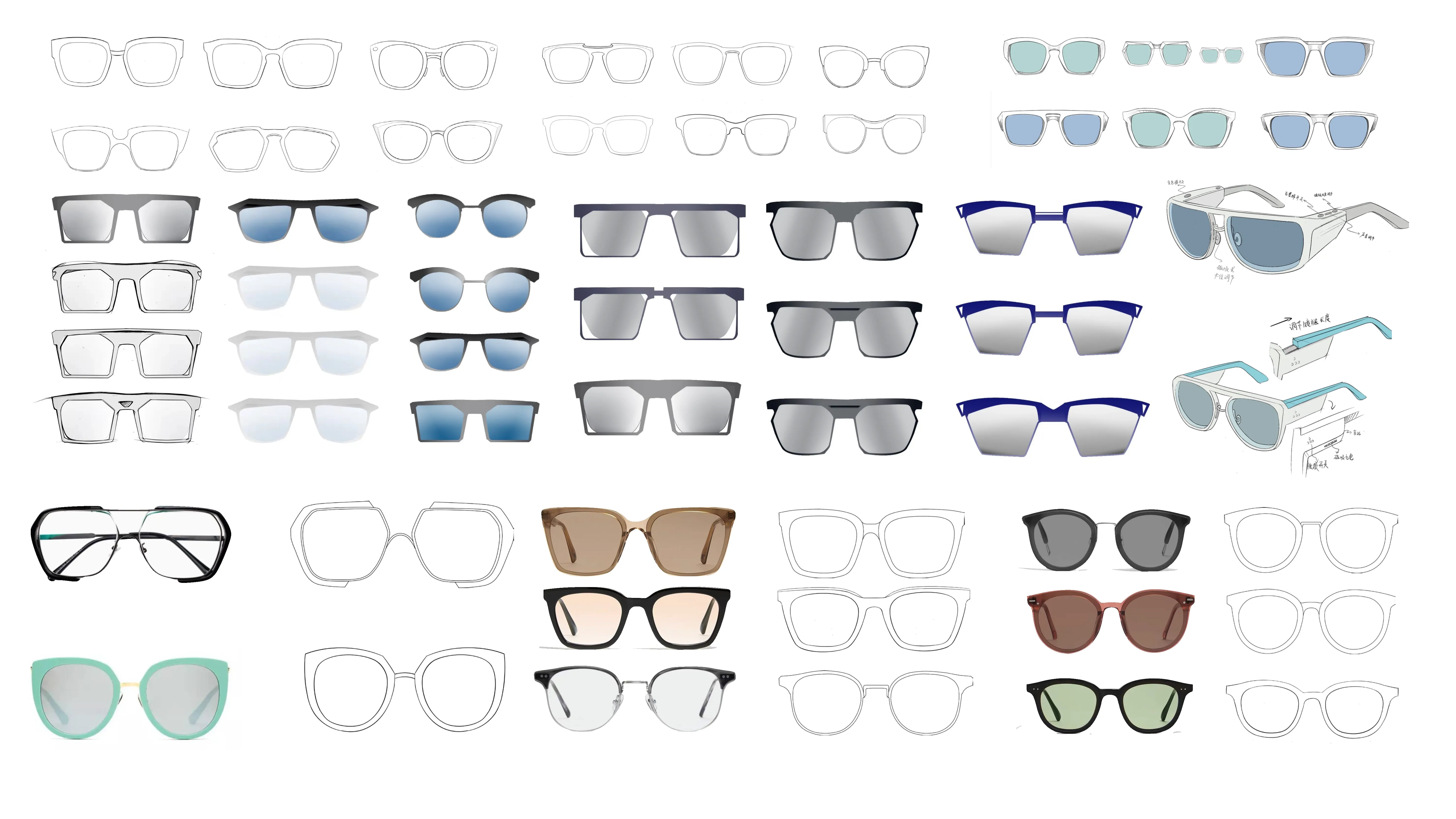
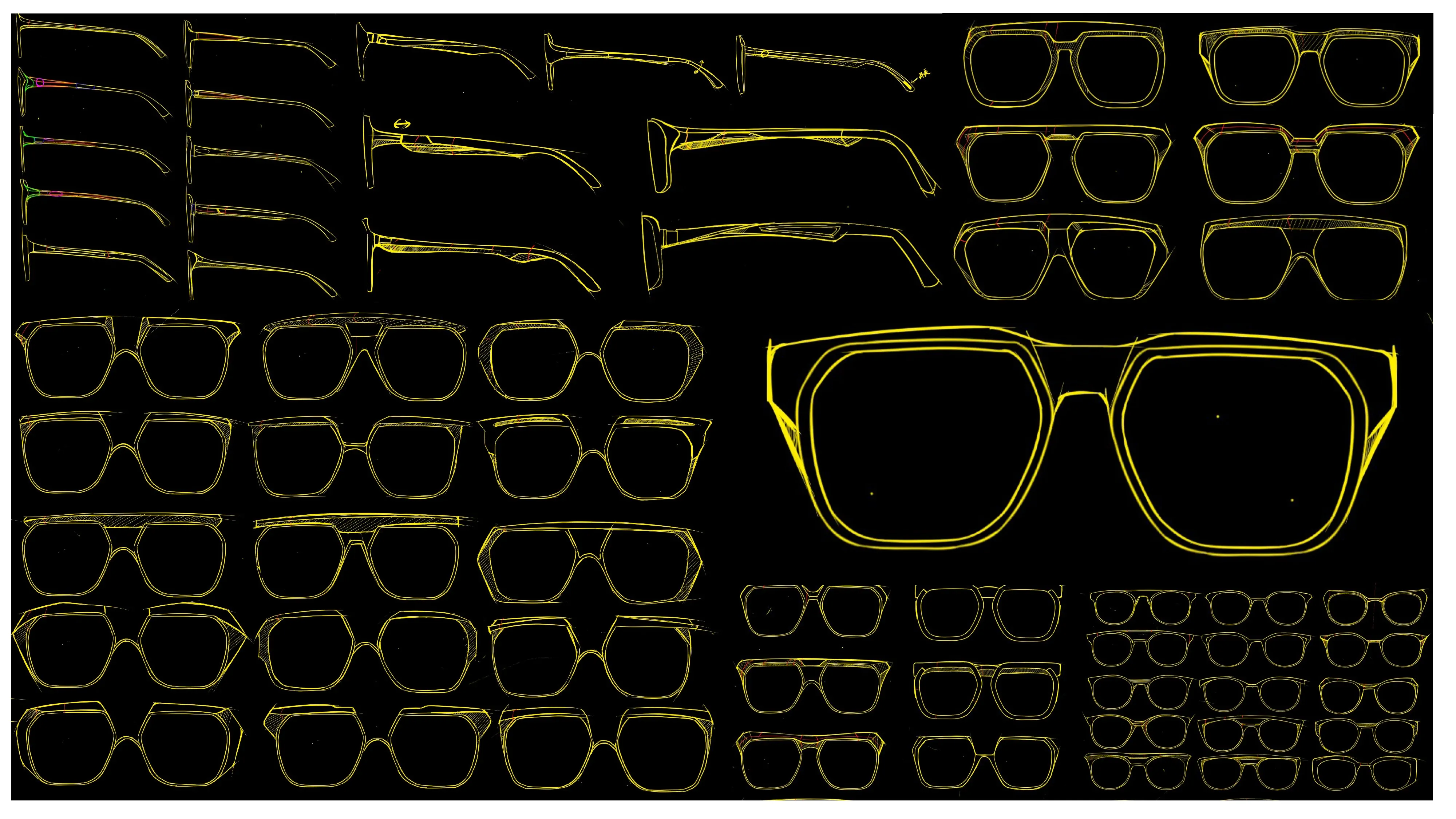
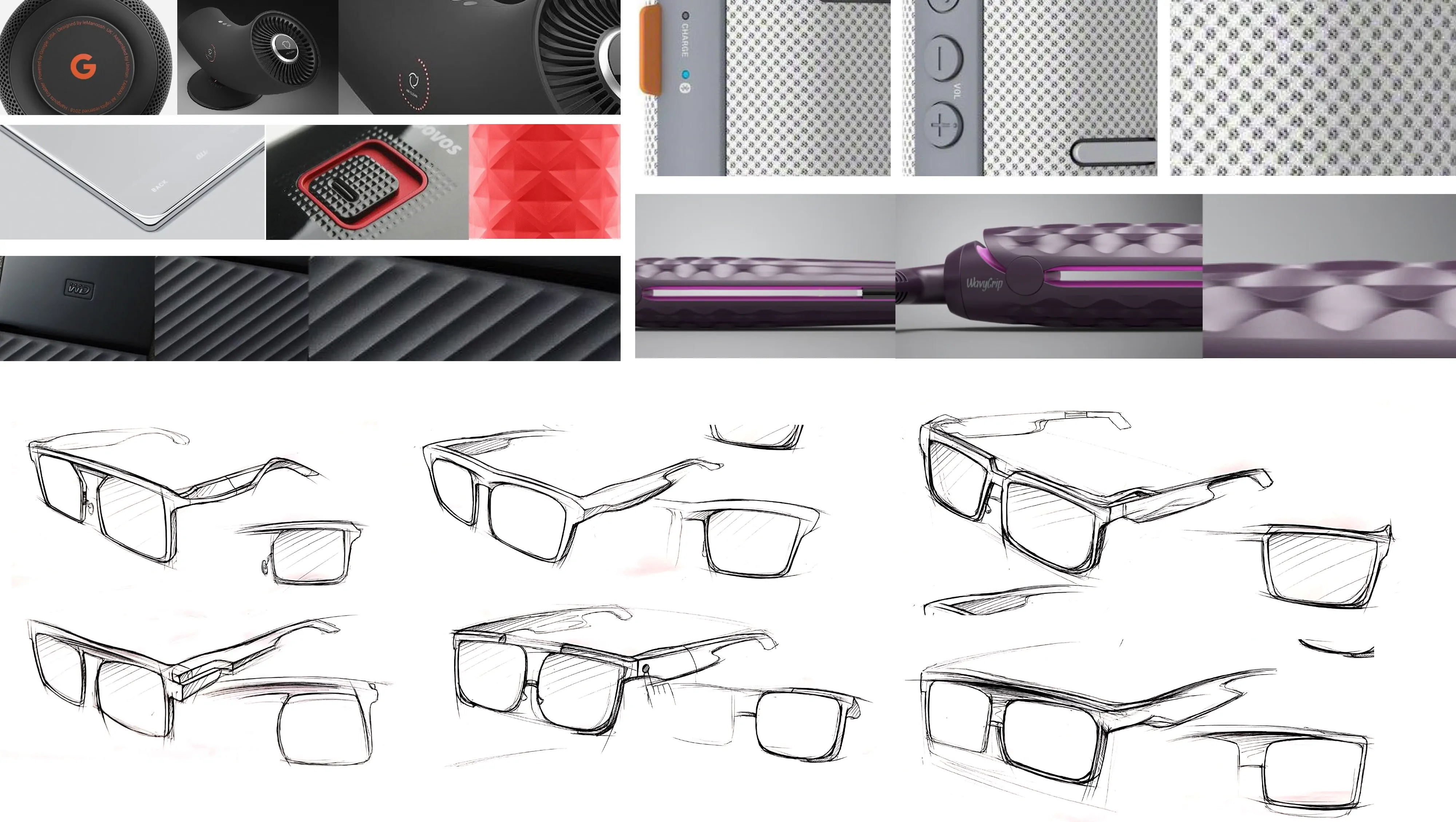
The final eyewear direction was reached through multiple rounds of form and interaction exploration rather than chosen at the beginning. Earlier concepts included full-face masks, detachable upper-and-lower modules, folding face-cover structures, and hybrid frame-plus-shield solutions. Each route was tested against practical questions: how much facial area should be covered, where the product should be supported, how quickly the user could put it on or interrupt the session, and how much the structure would interfere with makeup, hairstyle, or expression. These iterations made it clear that a full mask could offer more treatment area, but was harder to integrate into daily routines and less acceptable for public use.
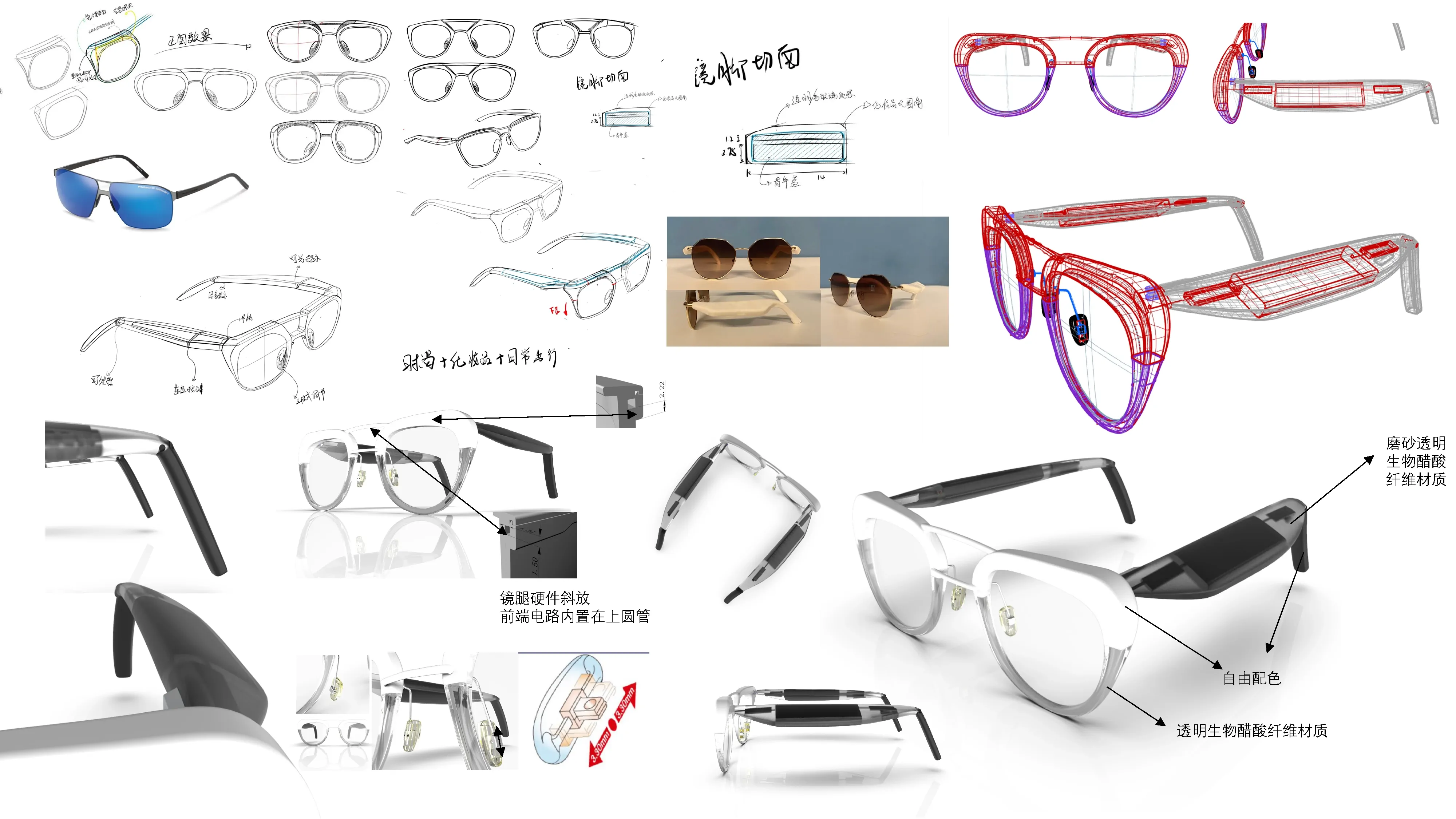
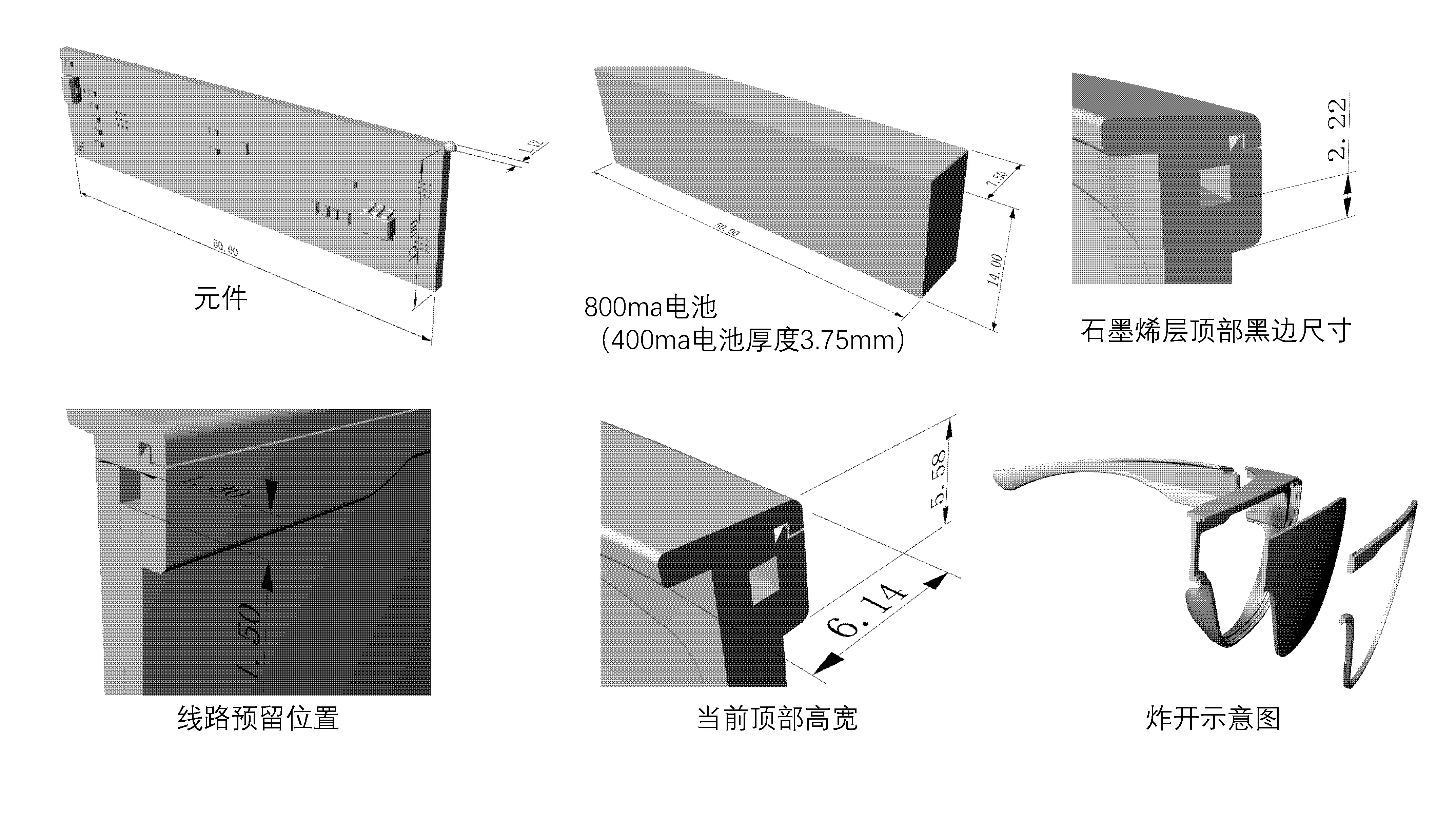
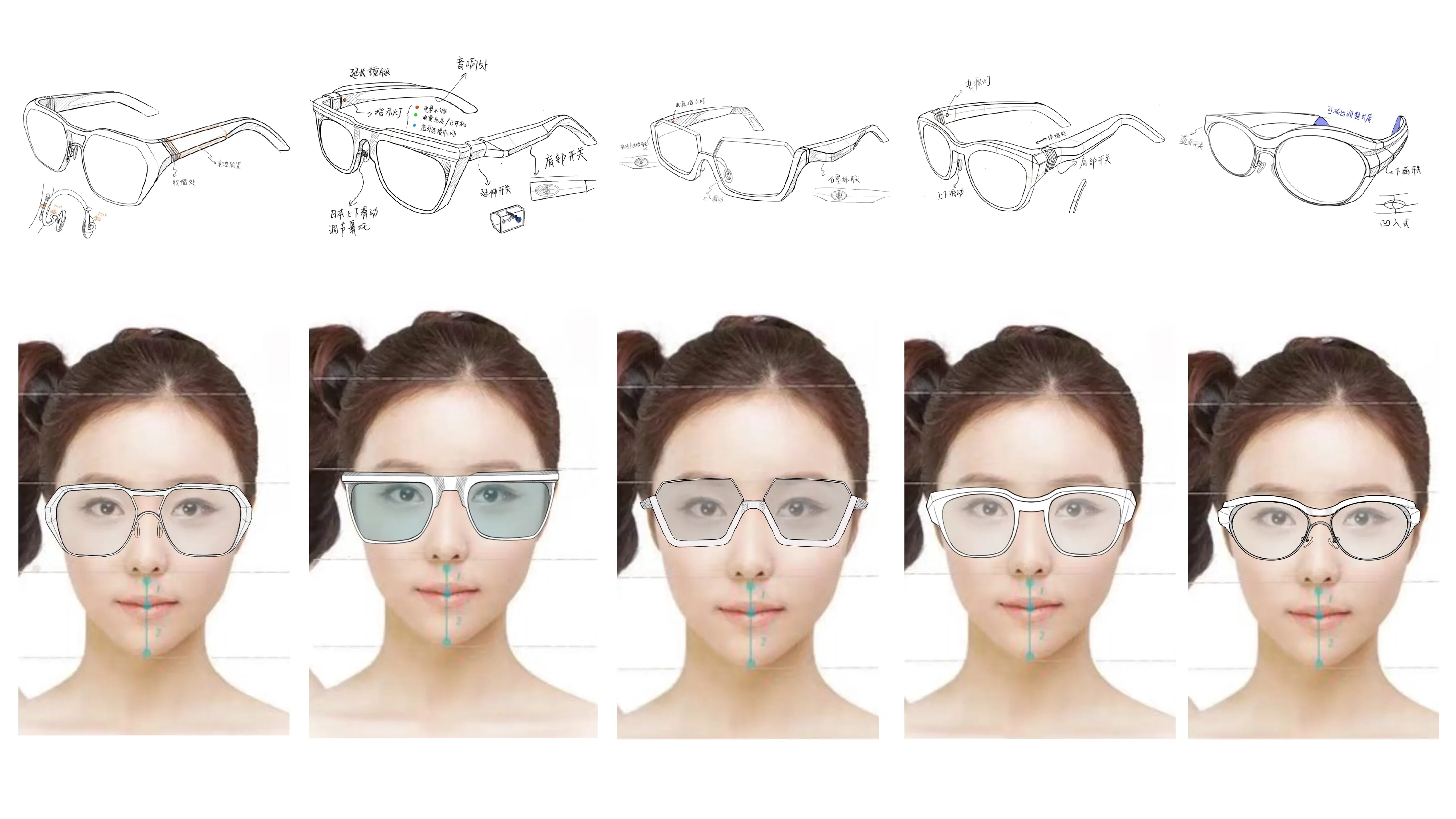
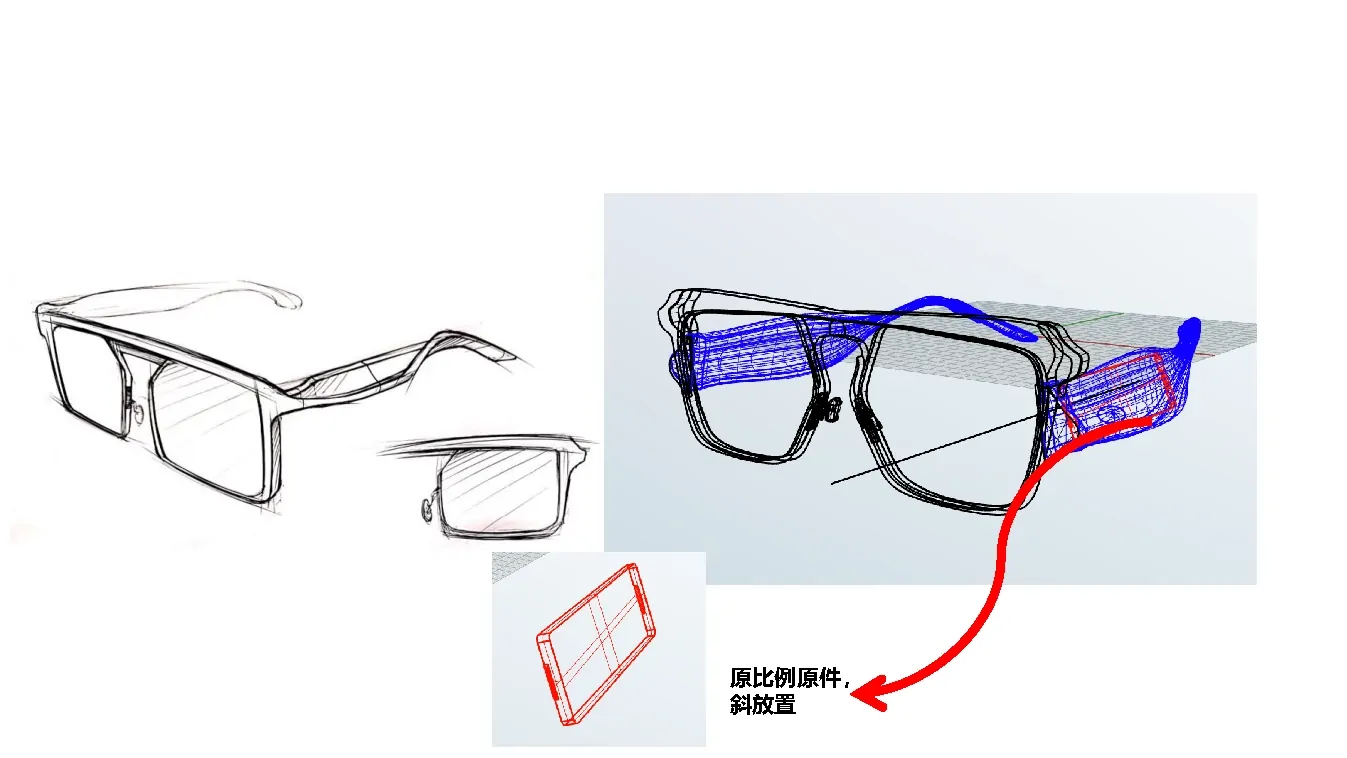
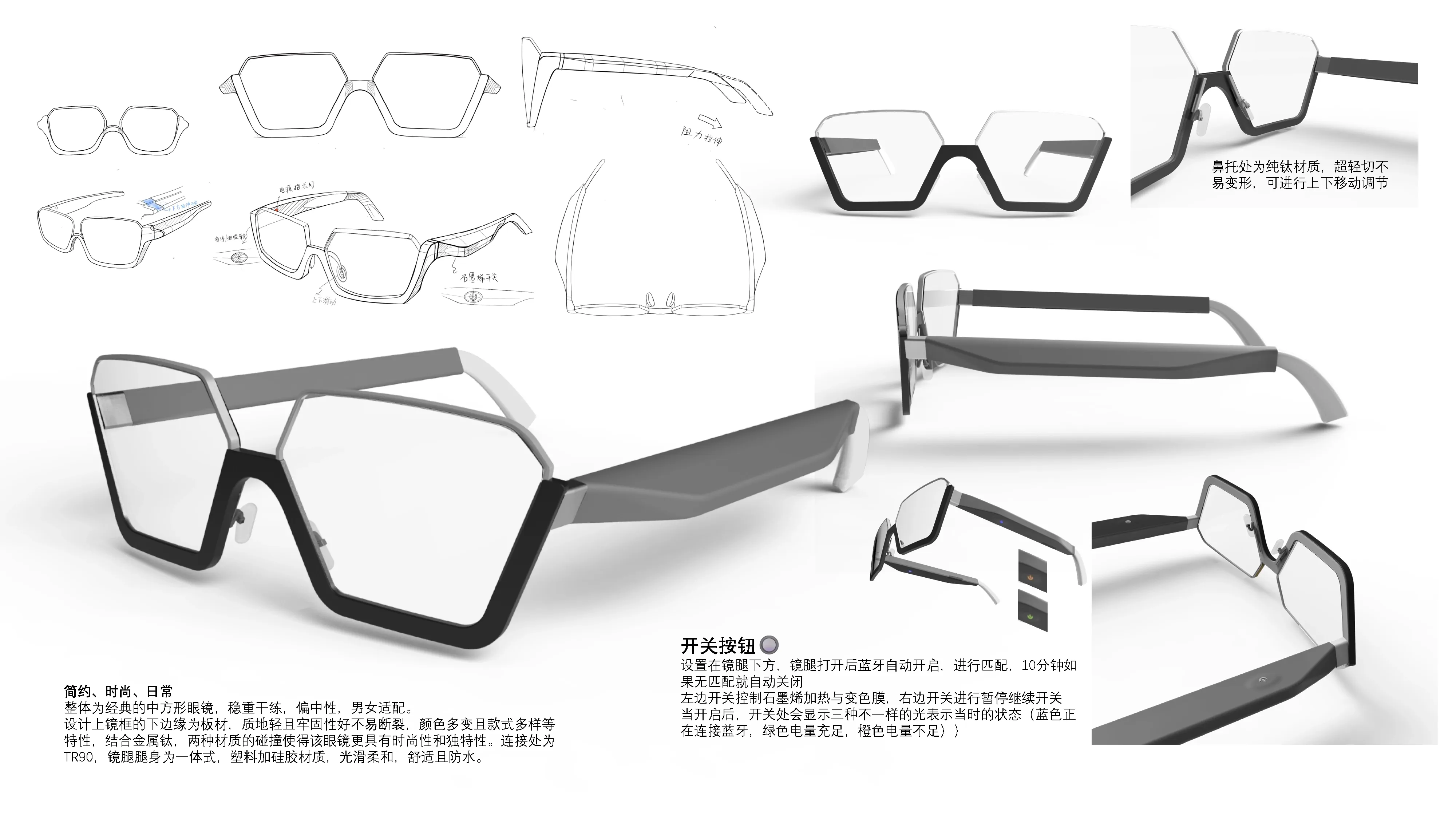
An eyewear-based format offered a stronger balance between portability, recognizability, and function. It preserved the therapeutic idea while reducing the perceived burden of the device. The oversized lens language, partial transparency, and visible internal circuitry were developed not as decoration alone, but as a way to recast technical components into part of the visual identity. Instead of hiding the device logic completely, the concept treated electronics, light feedback, and material layering as part of a futuristic fashion-tech expression.
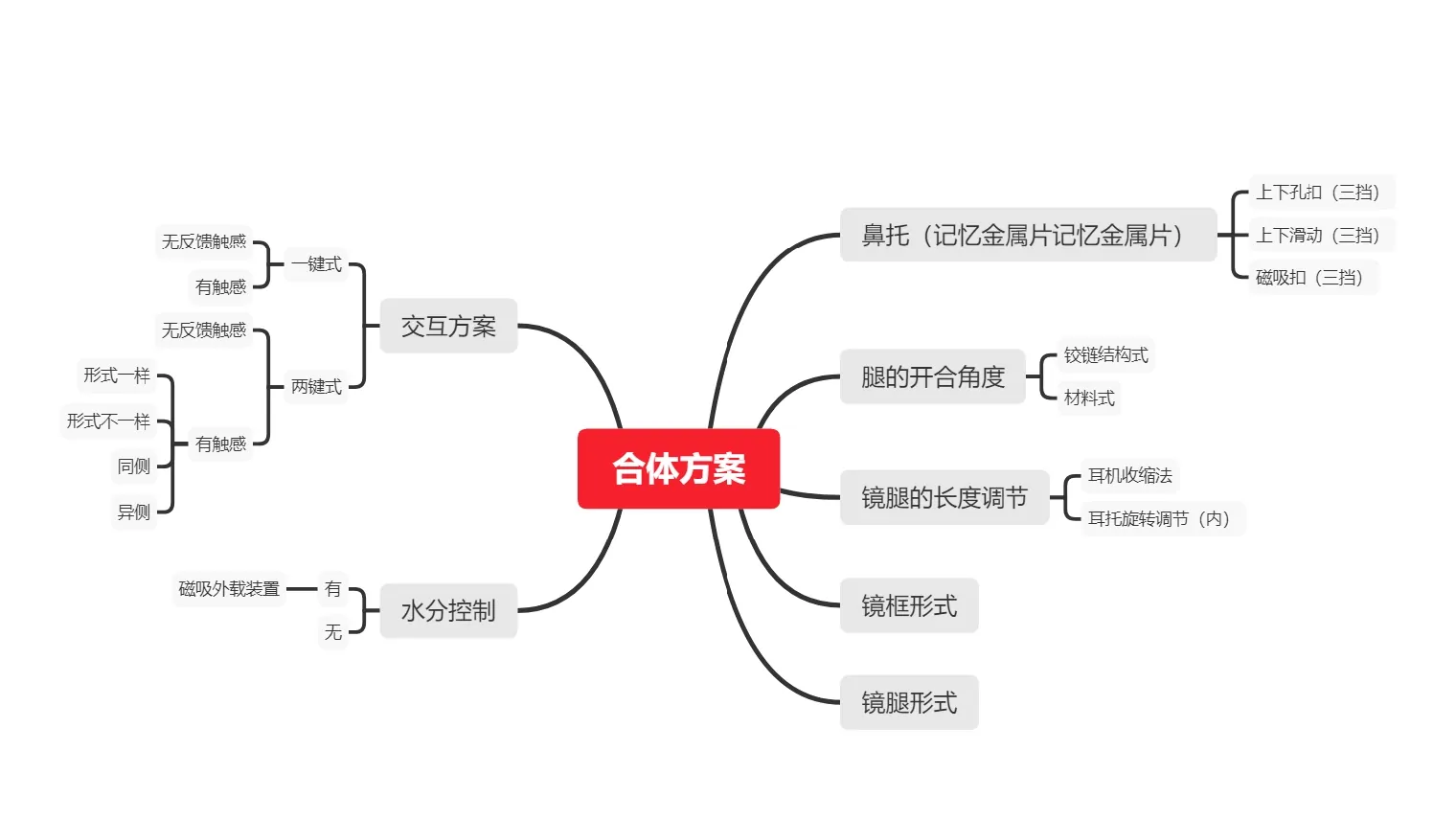
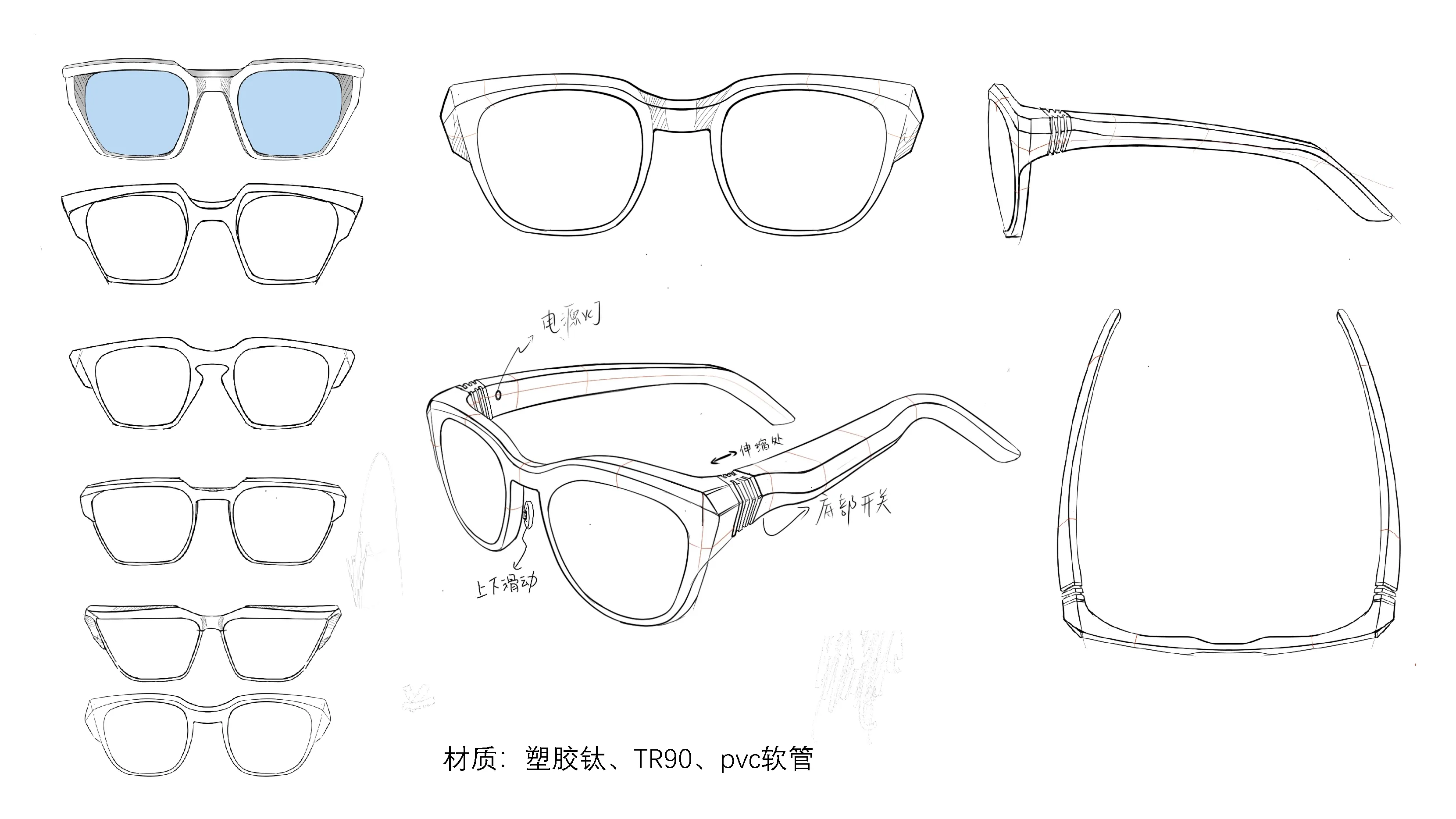
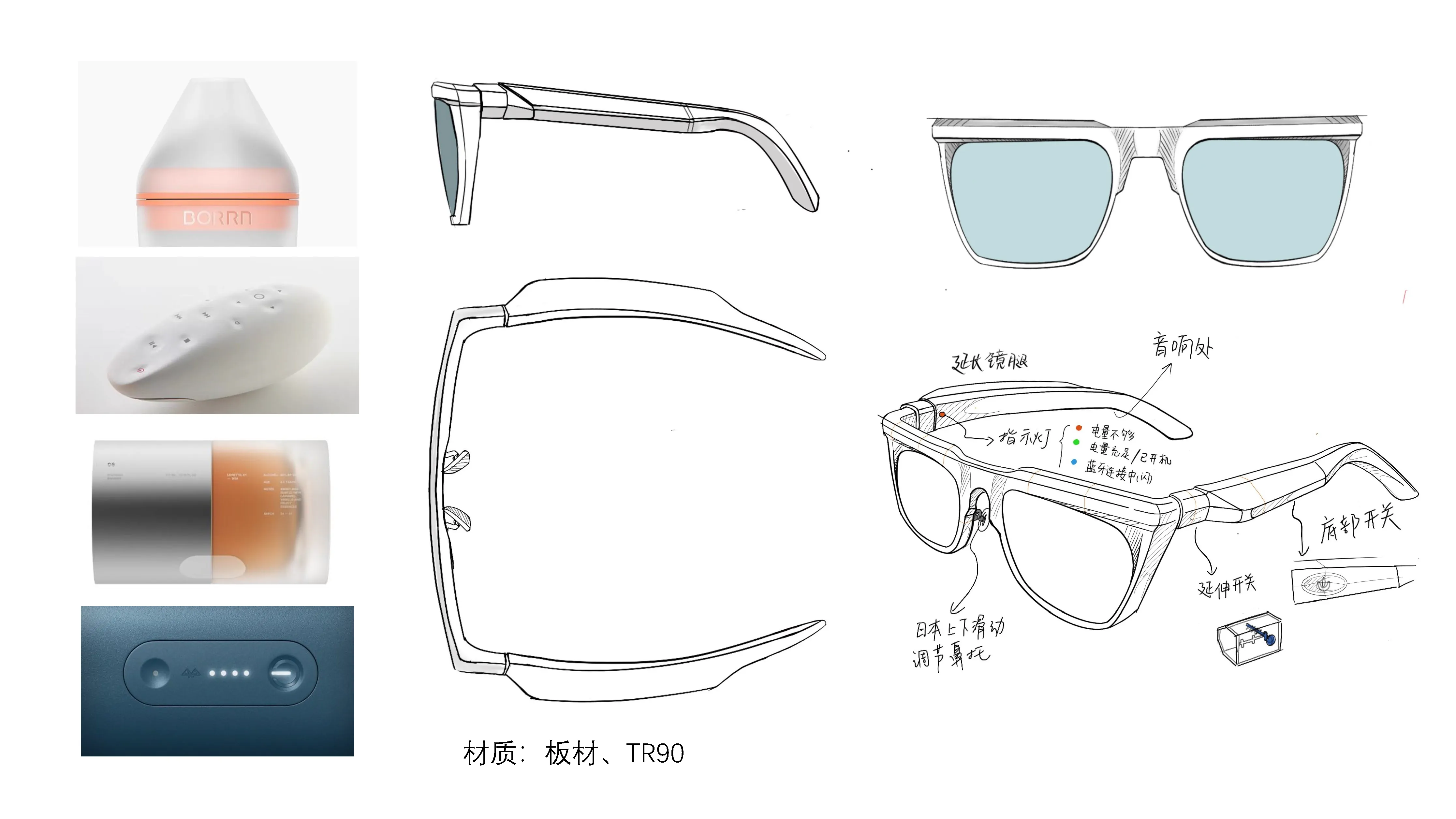
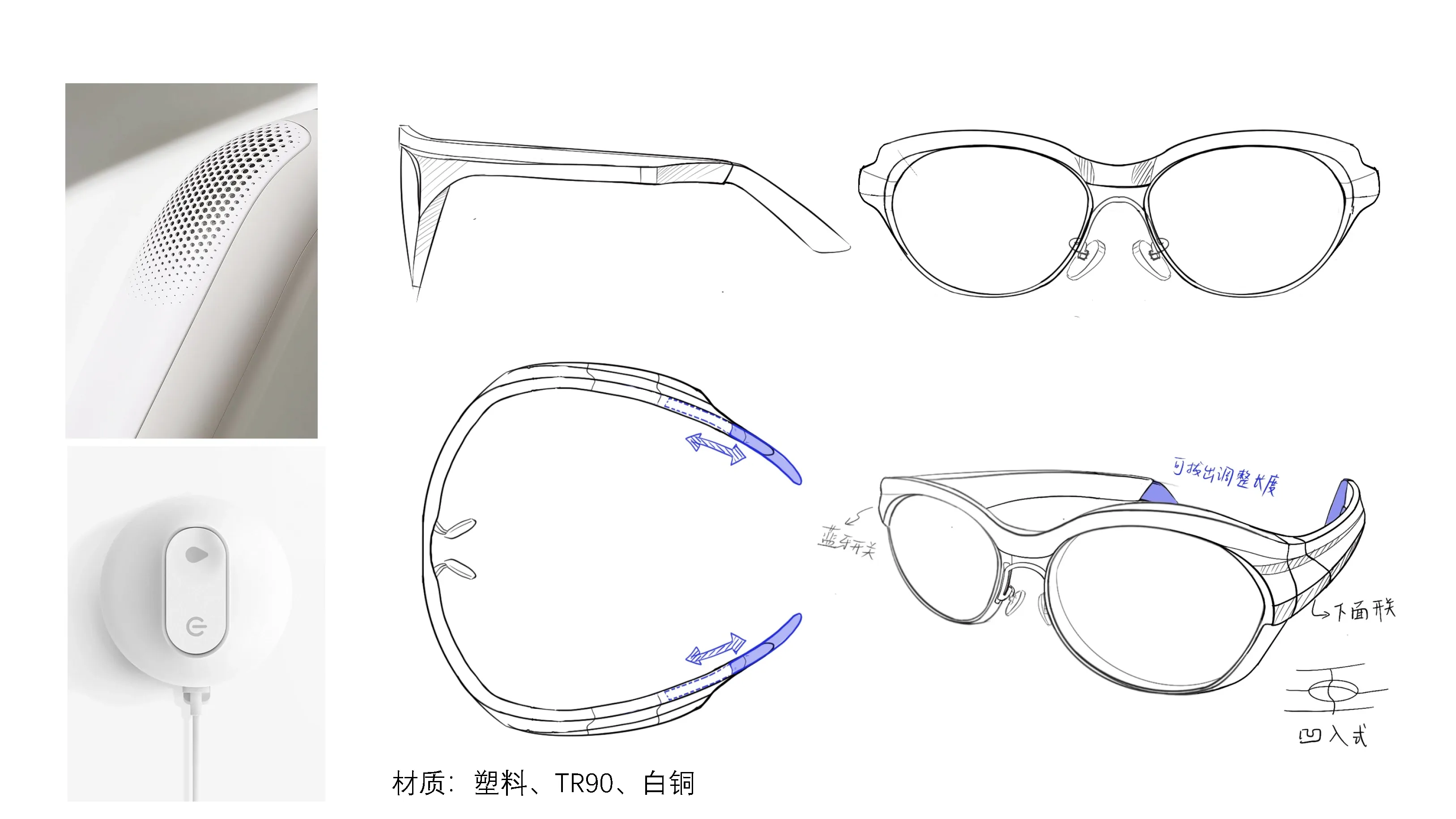
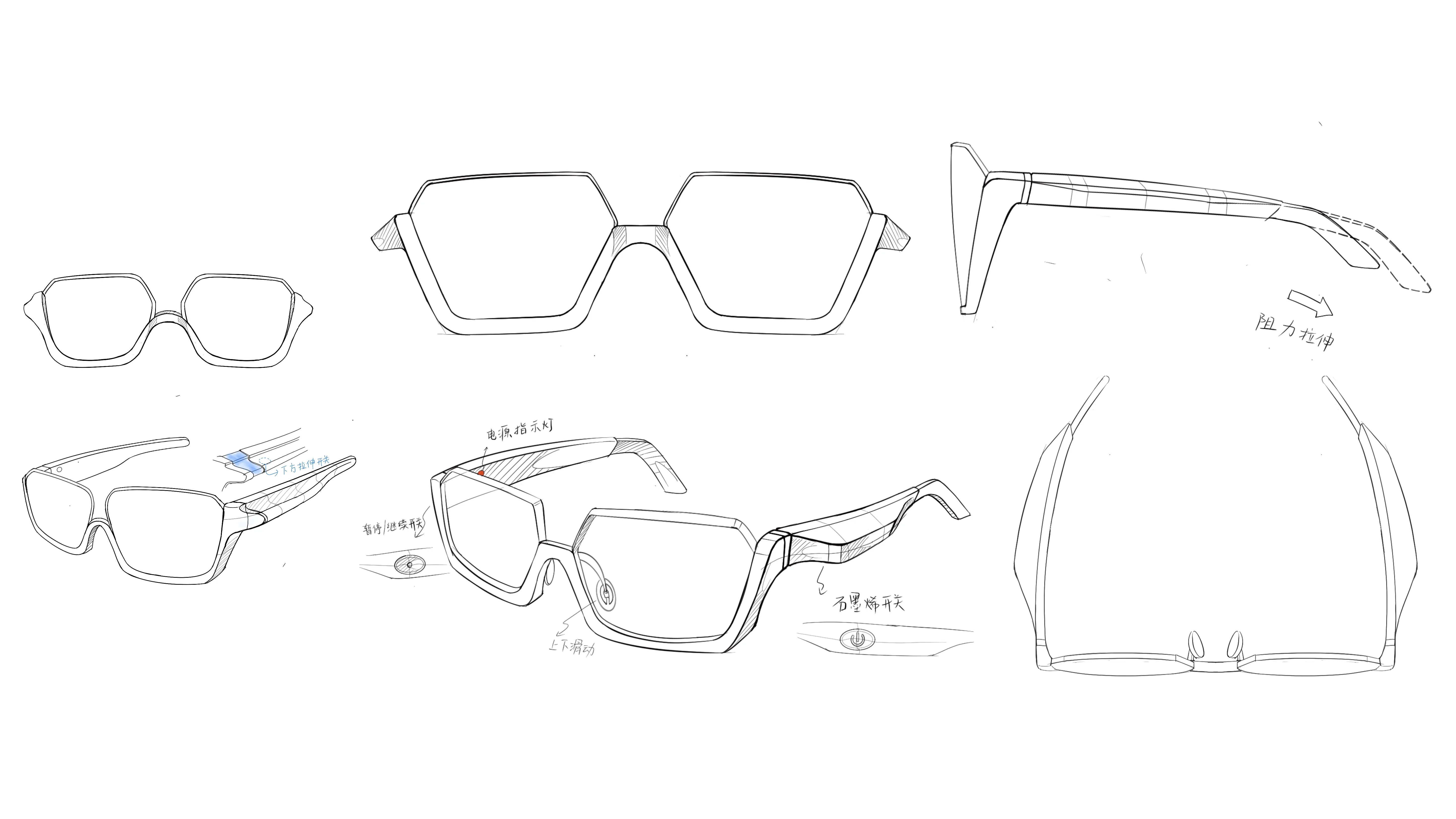
Another key thread in the project was fit and adaptability. Because face width, nose bridge height, and the distance between the nose and ears vary significantly across users, the concept explored adjustable temples, a three-position magnetic nose pad, and other wearable mechanisms that could help the device move closer to an “everyday fit” rather than a single fixed geometry. The proposal also considered electrochromic tinting so the product could operate between clear eyewear and a sunglass-like state, further reinforcing the idea that the device should belong to daily life instead of a separate treatment ritual.
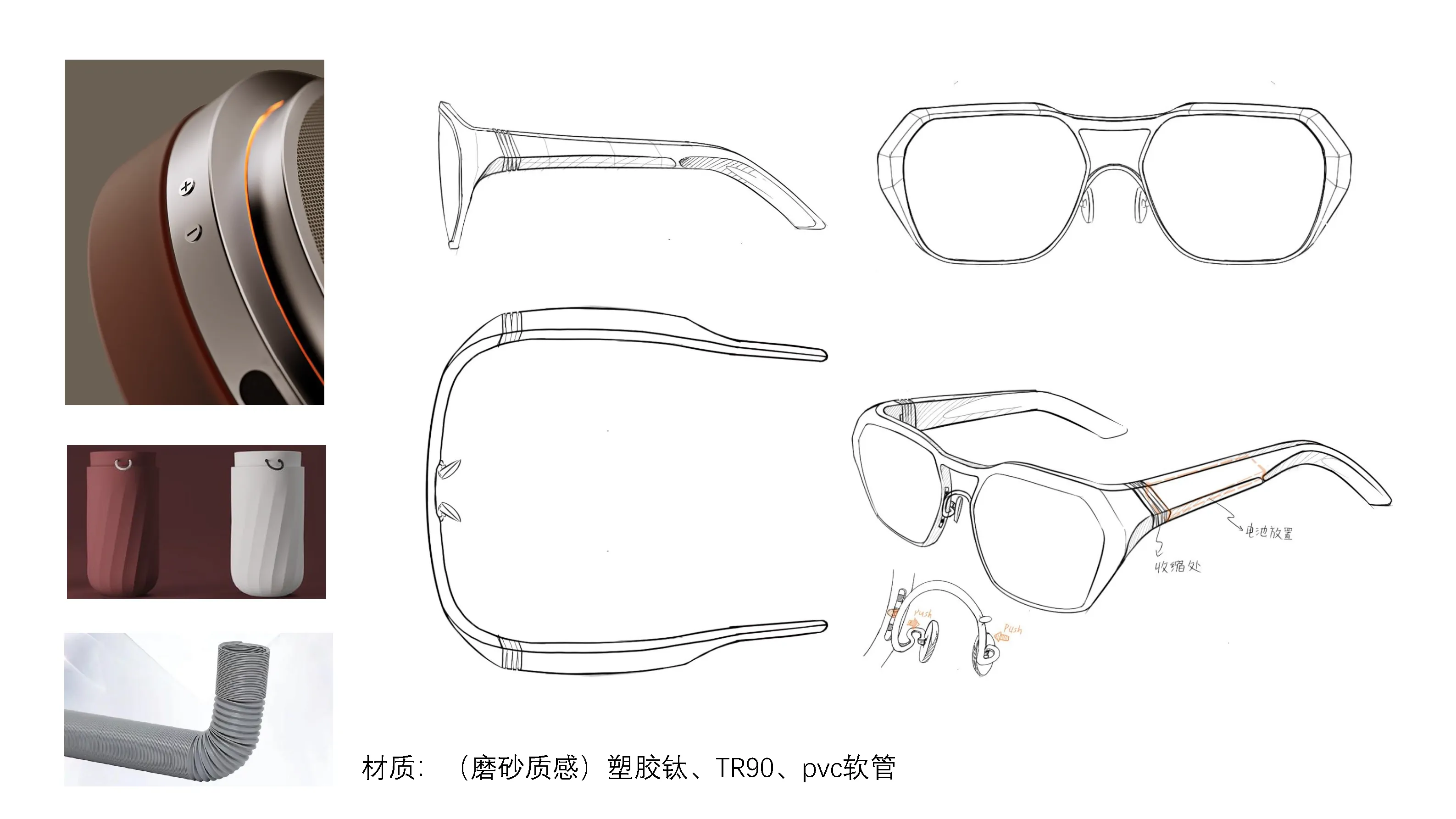
Design Resolution
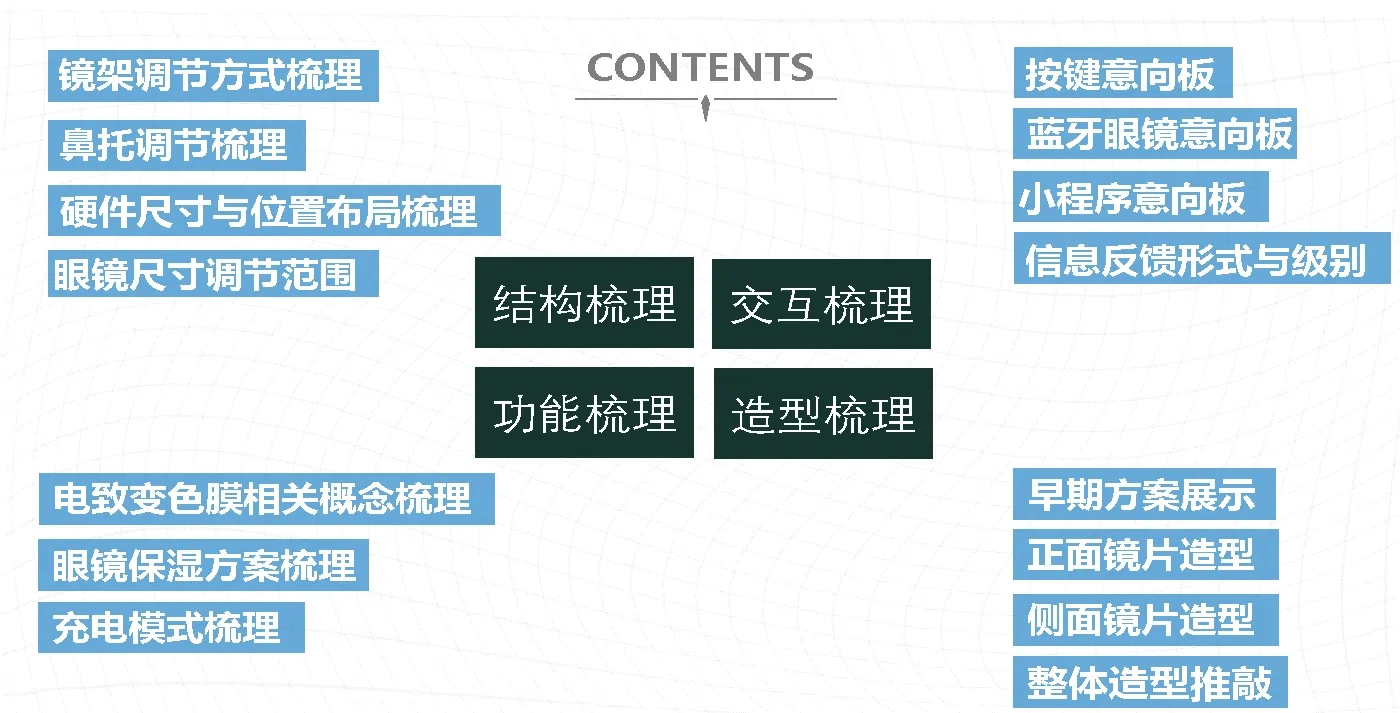
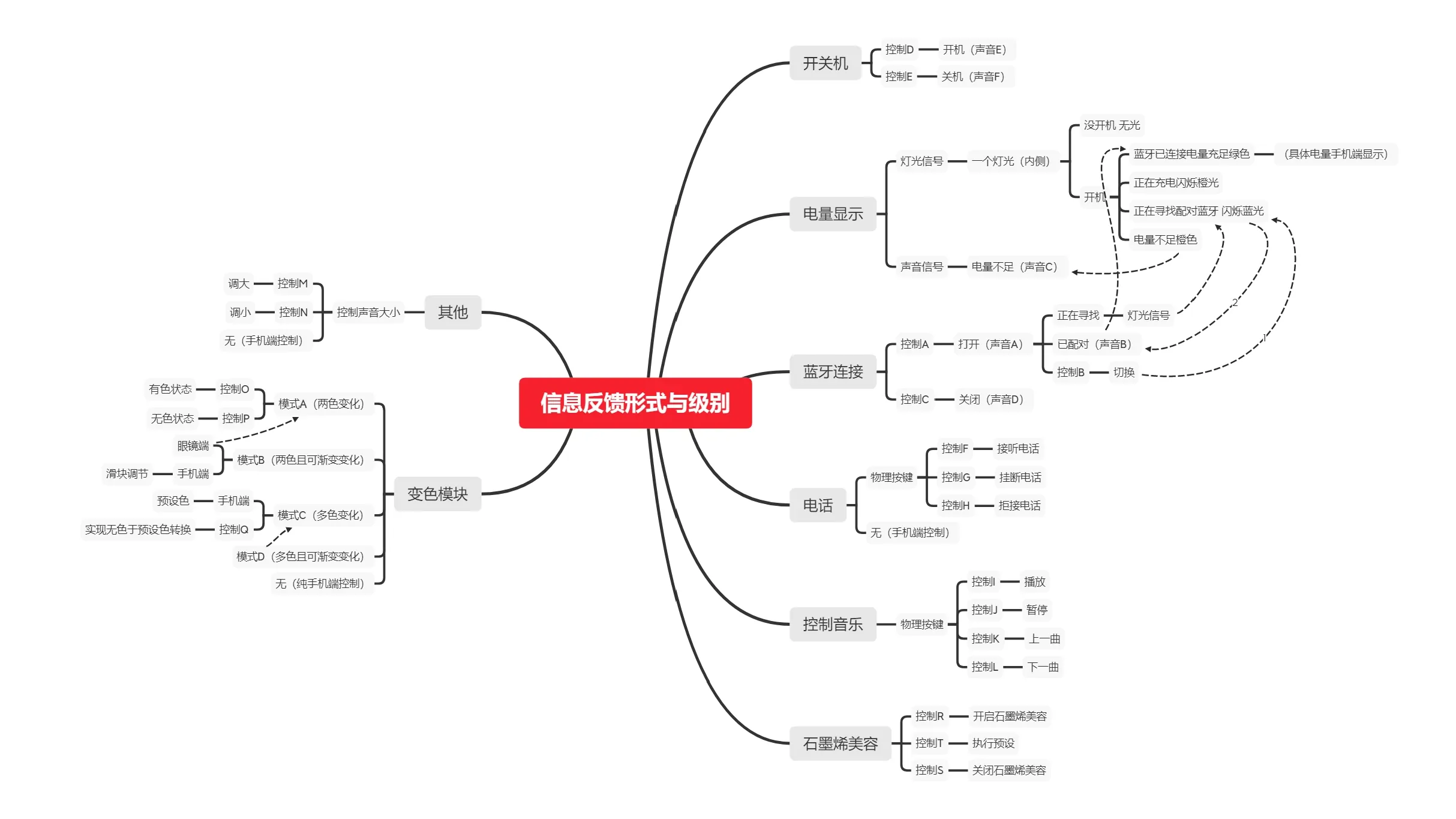
In the later disclosure-oriented stage, the concept was organized into a clearer system that combined transparent graphene therapeutic lenses, prescription-lens compatibility, adjustable temples, a magnetic multi-position nose support, and wearable control elements such as touch input and indicator feedback. Earlier feature explorations such as humidification, app connectivity, skin-state sensing, and audio modules helped widen the design space, while the later scheme narrowed attention to the parts that best supported the core proposition: everyday wearable therapy with a stronger sense of style, convenience, and personalization.
Across the project, competitor mapping, fit analysis, structure exploration, and disclosure-oriented documentation gradually turned a broad technology opportunity into a coherent product proposition. The resulting concept treated thermal therapy not as a separate ritual object, but as a wearable system shaped by fashion language, facial fit, and day-to-day usability.