
Preliminary experimental research on bamboo-based flexible materials, focusing on delignification, fibrillation, twisting, and tensile testing to explore bamboo as a spinnable fiber source.
Overview
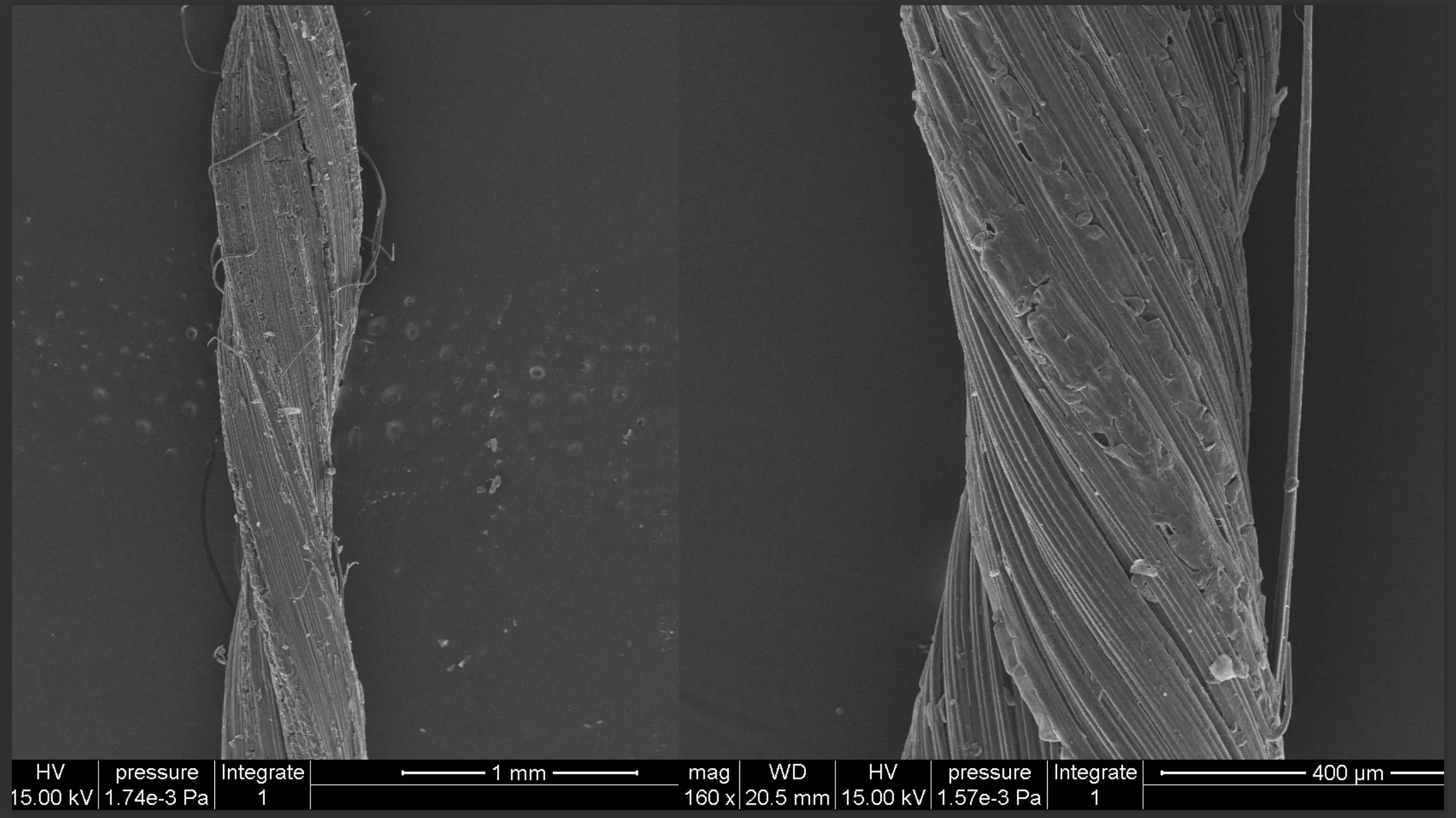
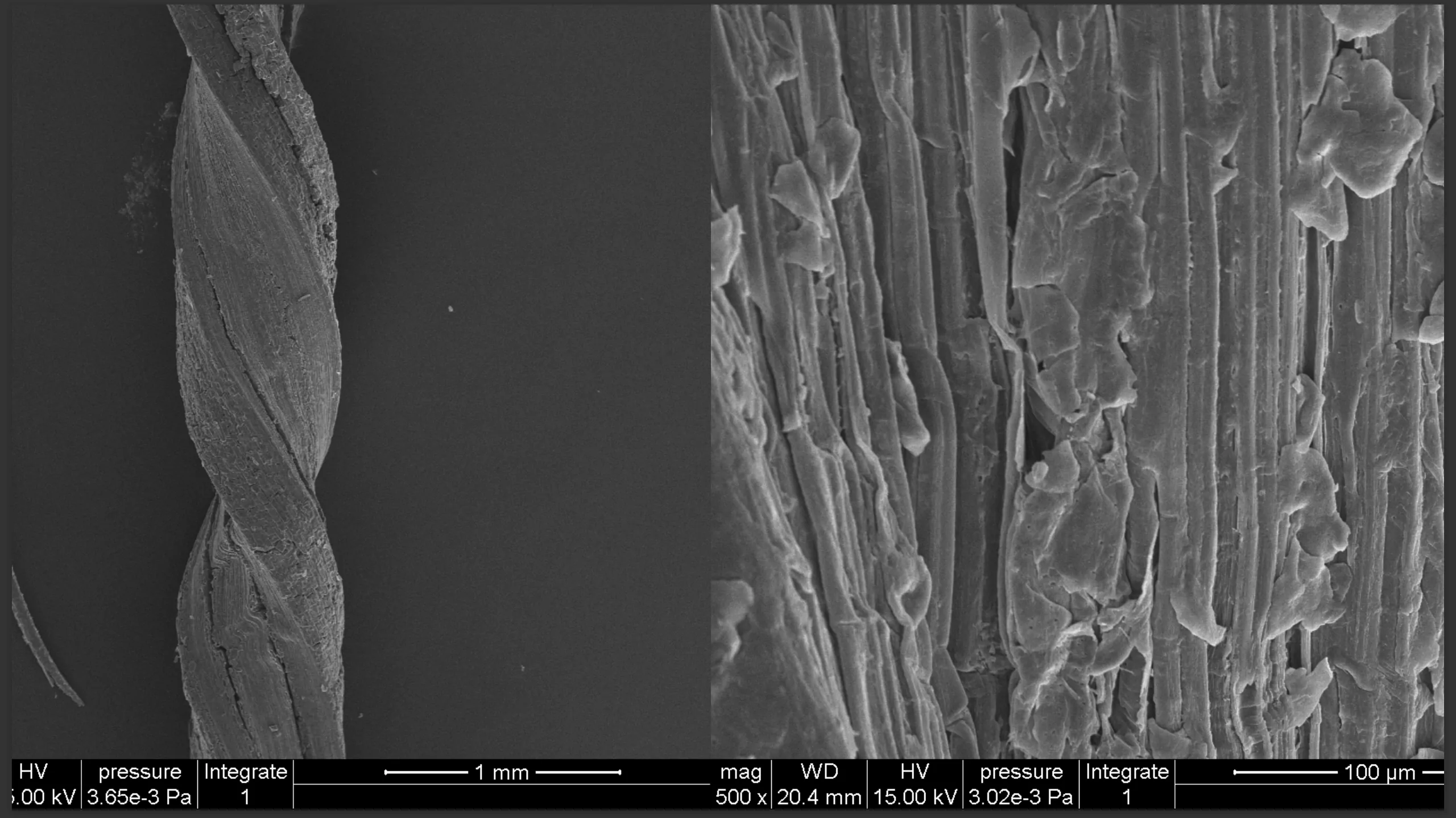
This project focused on an early-stage material workflow for converting bamboo from a rigid structural material into a softer, more textile-like fiber bundle. The overall aim was to explore whether bamboo could be processed into a spinnable source material for flexible composites, wearable substrates, or other fiber-based applications.
Experimental Process
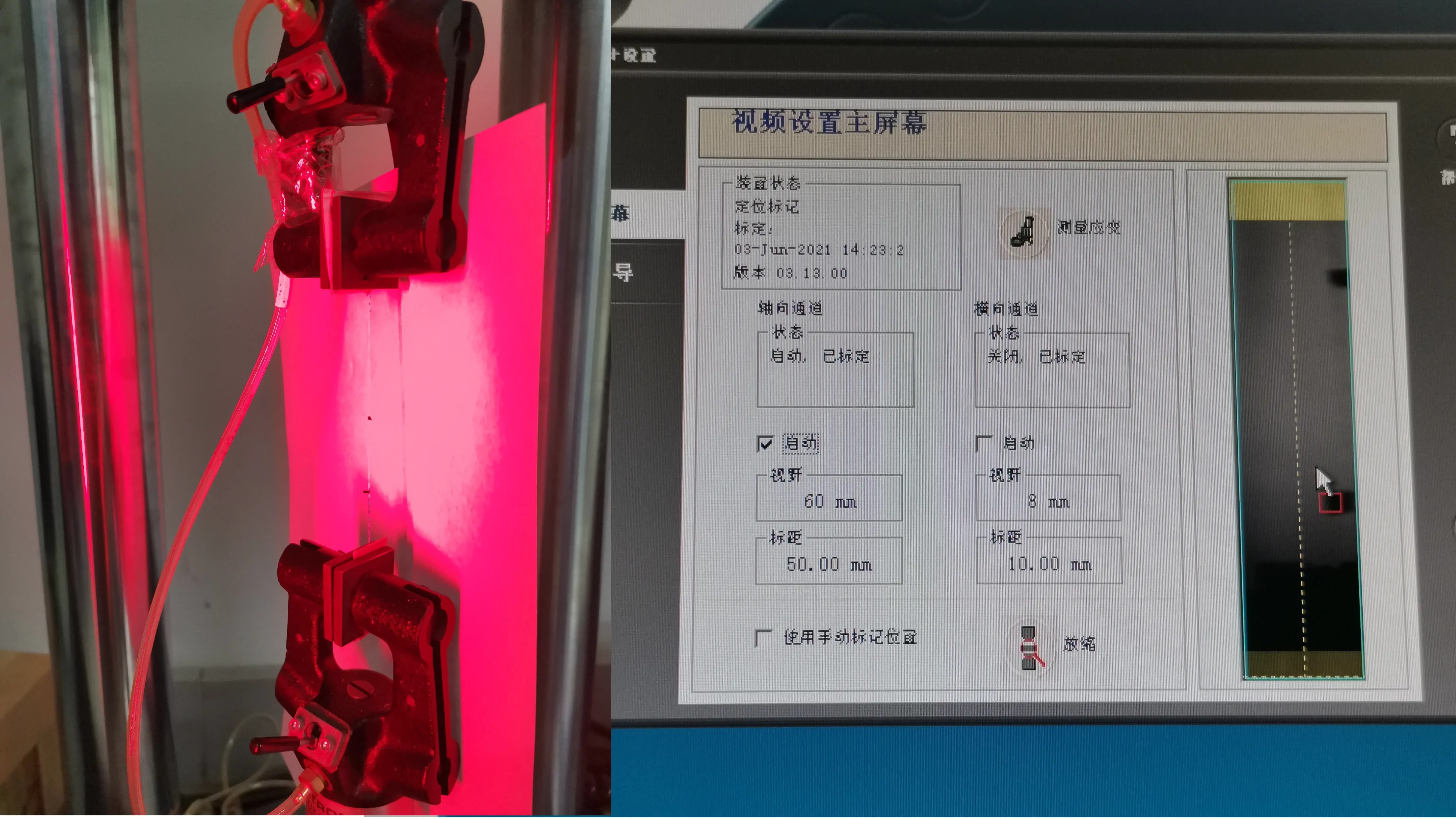
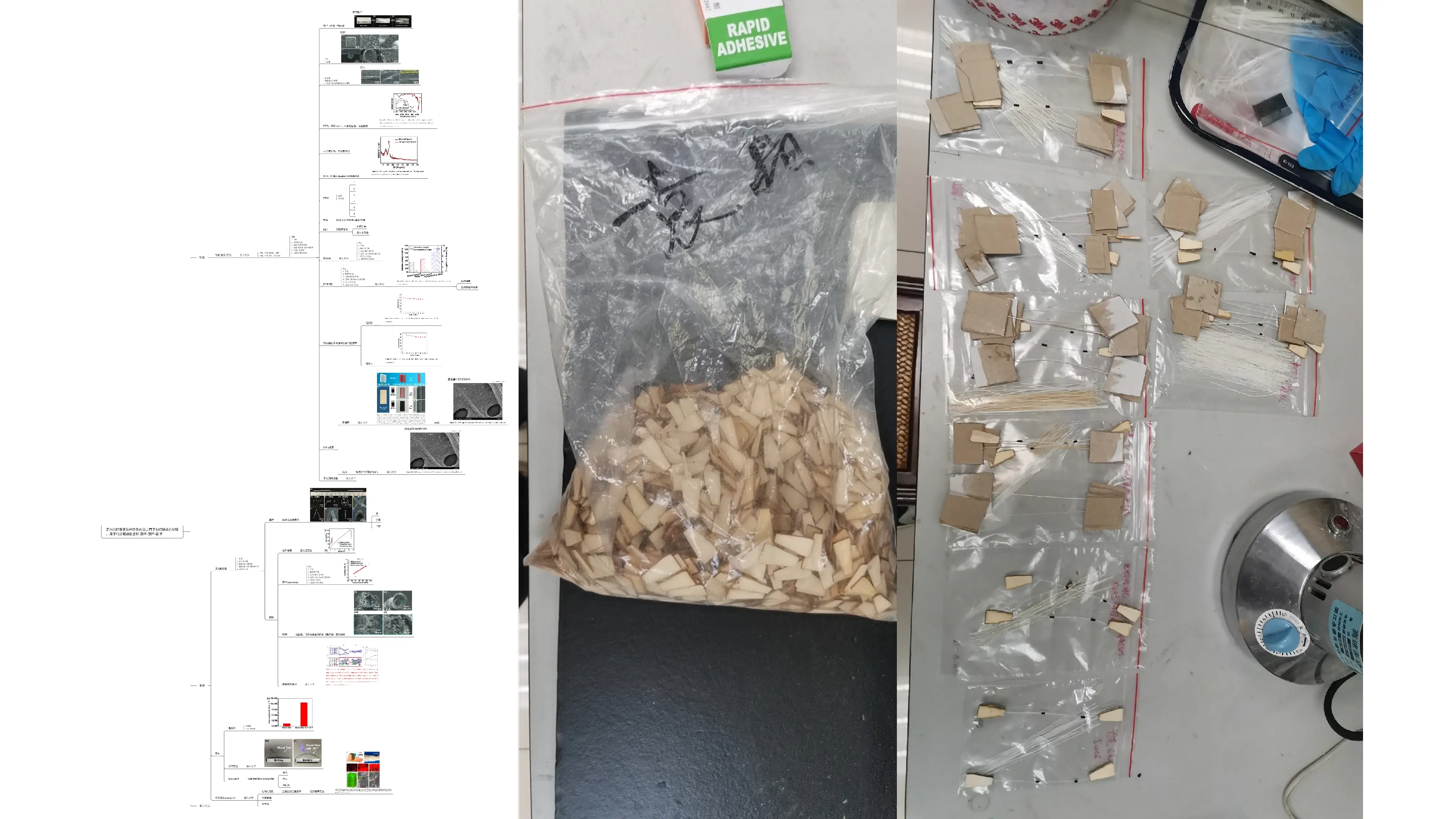
The work centered on sample preparation, process variation, and mechanical testing. Bamboo green, bamboo yellow, and bamboo skin were compared as different source regions, while delignification time, twisting condition, and single-strand versus bundled testing were treated as key variables. The experiments gradually formed a matrix that compared untreated samples, delignified but untwisted samples, and delignified then twisted samples across multiple time windows such as 3, 4, 5, and 6 hours.
Material Behavior
The main challenge was not only producing the samples, but testing them in a stable and interpretable way. After delignification, bamboo bundles became looser and more fragile, which introduced slippage, fracture at the clamping ends, and sensitivity to gauge length and fixture setup. The experiments showed that bamboo skin had clearly higher tensile strength than bamboo yellow in early comparisons, while over-twisting could directly trigger failure. Delignification improved the potential for fibrillation and softness, but it also increased structural instability, making fixture design and process control central to the material workflow.